2019 · Question 16 · Section B
Moon missions
Earth and Moon · Gravity · Solar system · Graphs
Mixed topics: some parts assess other topics. The whole question is preserved.
Open in original paper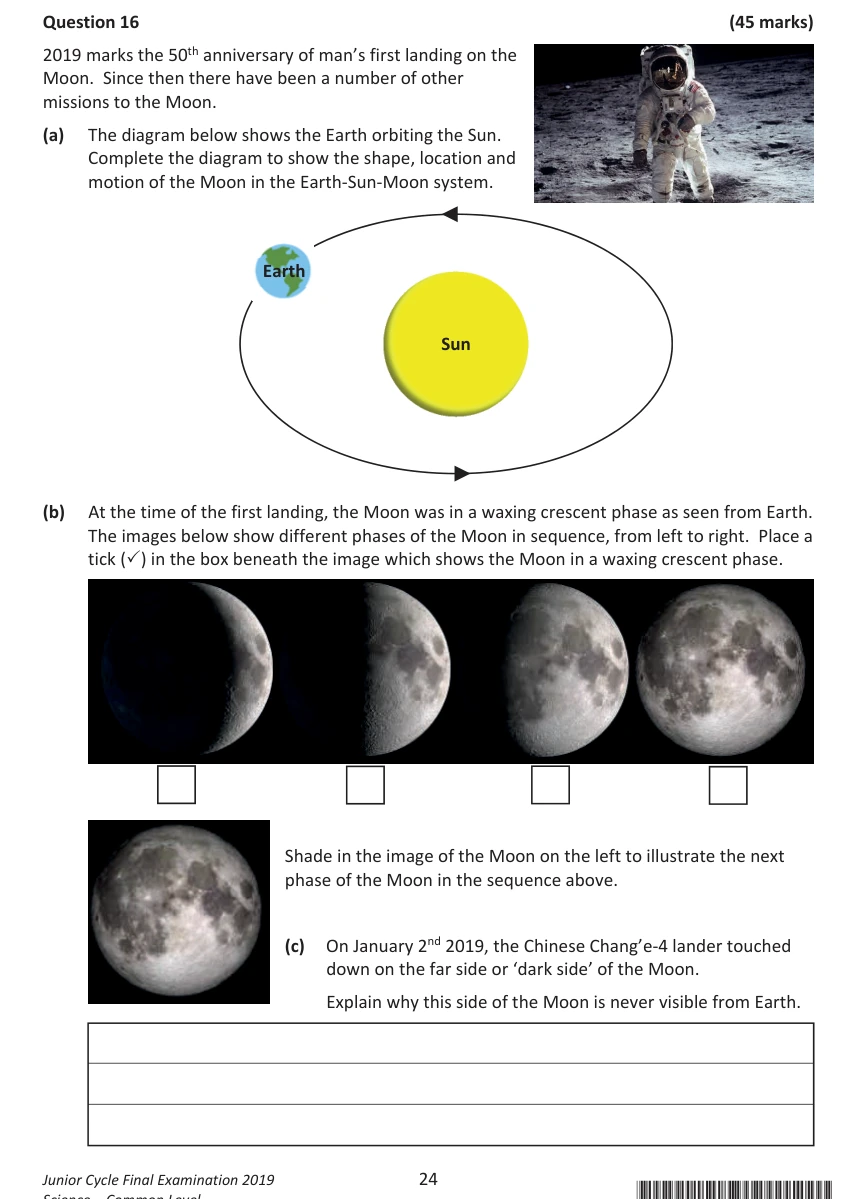
Show solutions
2019 · Question 16 · Worked solution
Answers are placed on the original paper, with diagram labels and blue teaching notes alongside. Teacher-completed model based on the SEC marking scheme. Added explanations are teaching notes; no answer mark allocations have been added.
Text version and further explanations
Study solution adapted from SEC marking scheme with added explanation. Teaching guidance, not an official SEC worked answer.
Working and answers are in dark text. Blue “Why this works” notes explain the key ideas beside the relevant step. On a phone, the note appears directly underneath.
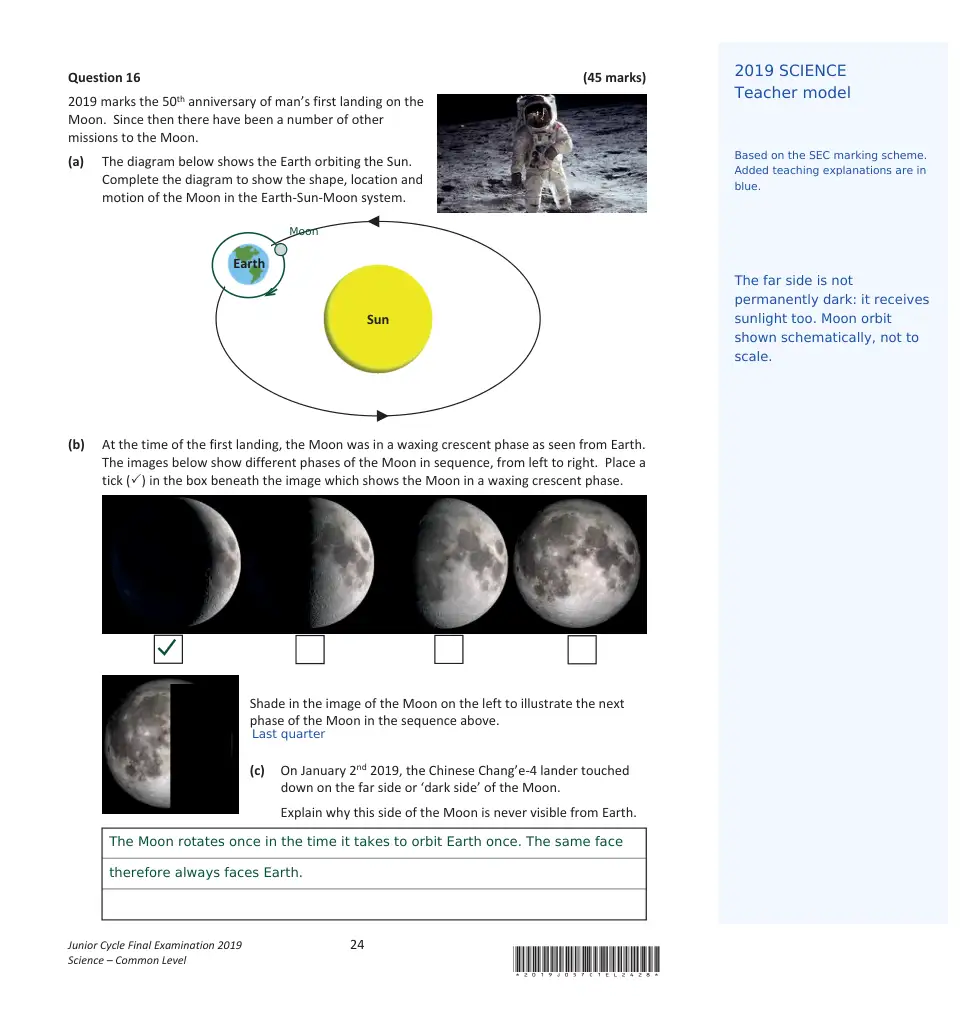
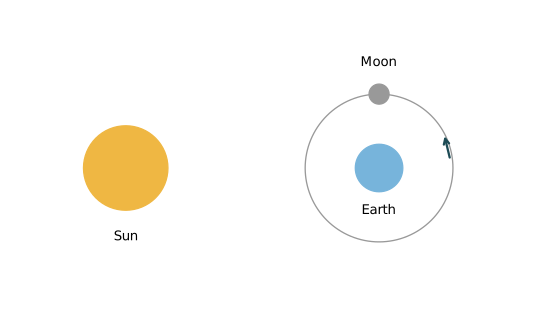
a) Draw a circular Moon near Earth, with an orbital path and arrow showing it moving around Earth. See the model diagram.
b) Choose the first image (waxing crescent). The next phase to draw after the displayed sequence is last quarter: shade the right half and leave the left half bright.
c) The Moon rotates once in the same time that it orbits Earth once. The same face therefore stays towards Earth. The far side receives sunlight too.
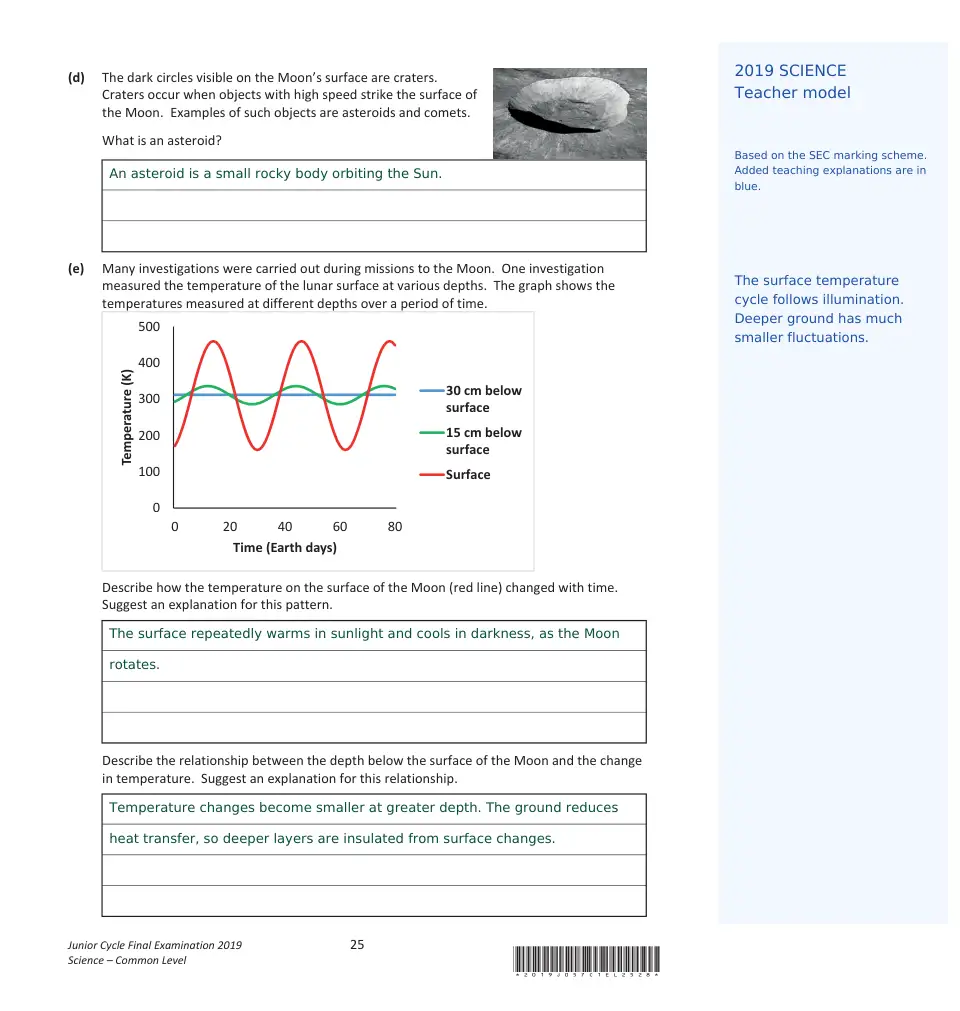
d) An asteroid is a small rocky body orbiting the Sun.
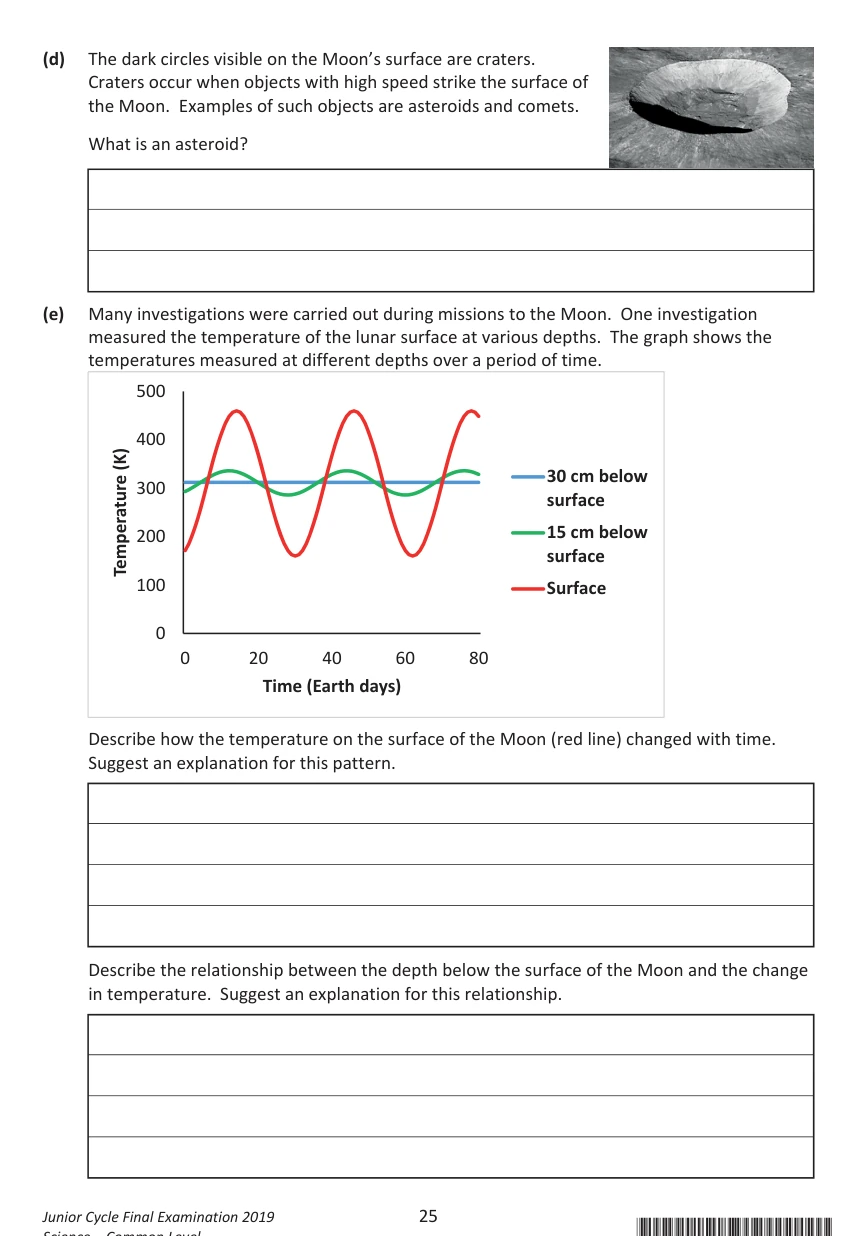
e) Surface temperature rises in sunlight and falls in darkness. Temperature changes become smaller at greater depth because the ground reduces heat transfer.
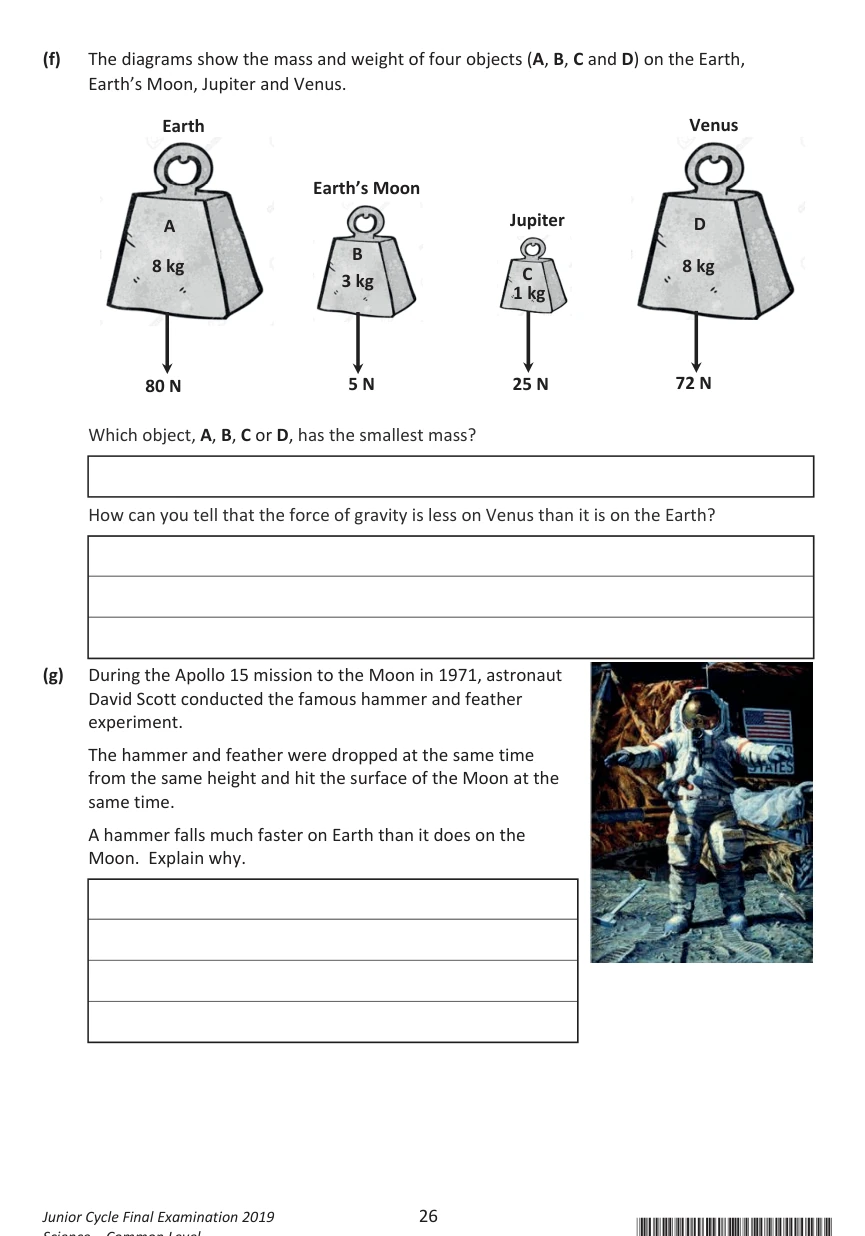
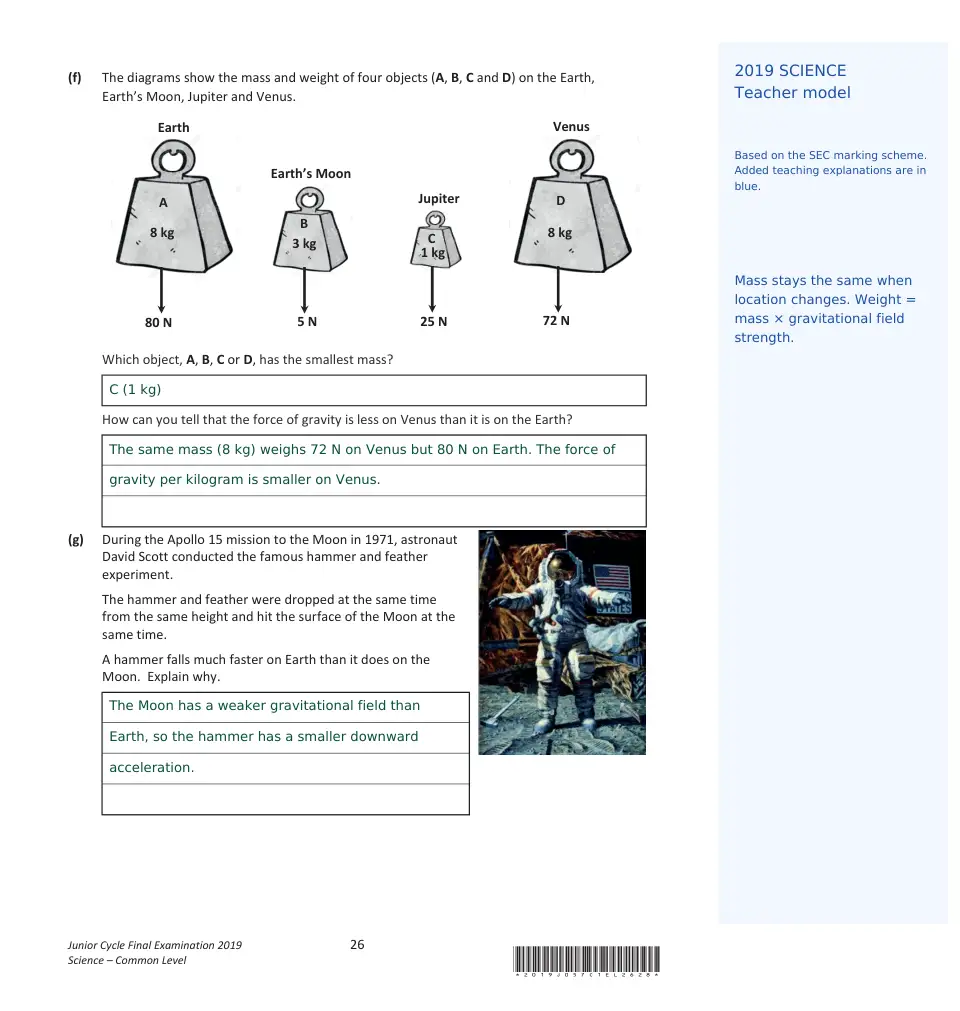
f) C has the smallest mass (1 kg). The same 8 kg mass weighs 72 N on Venus and 80 N on Earth.
g) The Moon's gravitational field is weaker, so the hammer's downward acceleration is smaller.
Teacher sign-in and homework controls
Questions and worked solutions are open to everyone. Teachers can sign in to assign homework.
Join a class or manage your homework →