2022 · Question 2 · Section A
Celestial objects and eclipses
Solar system · Earth and Moon
Mixed topics: some parts assess other topics. The whole question is preserved.
Open in original paper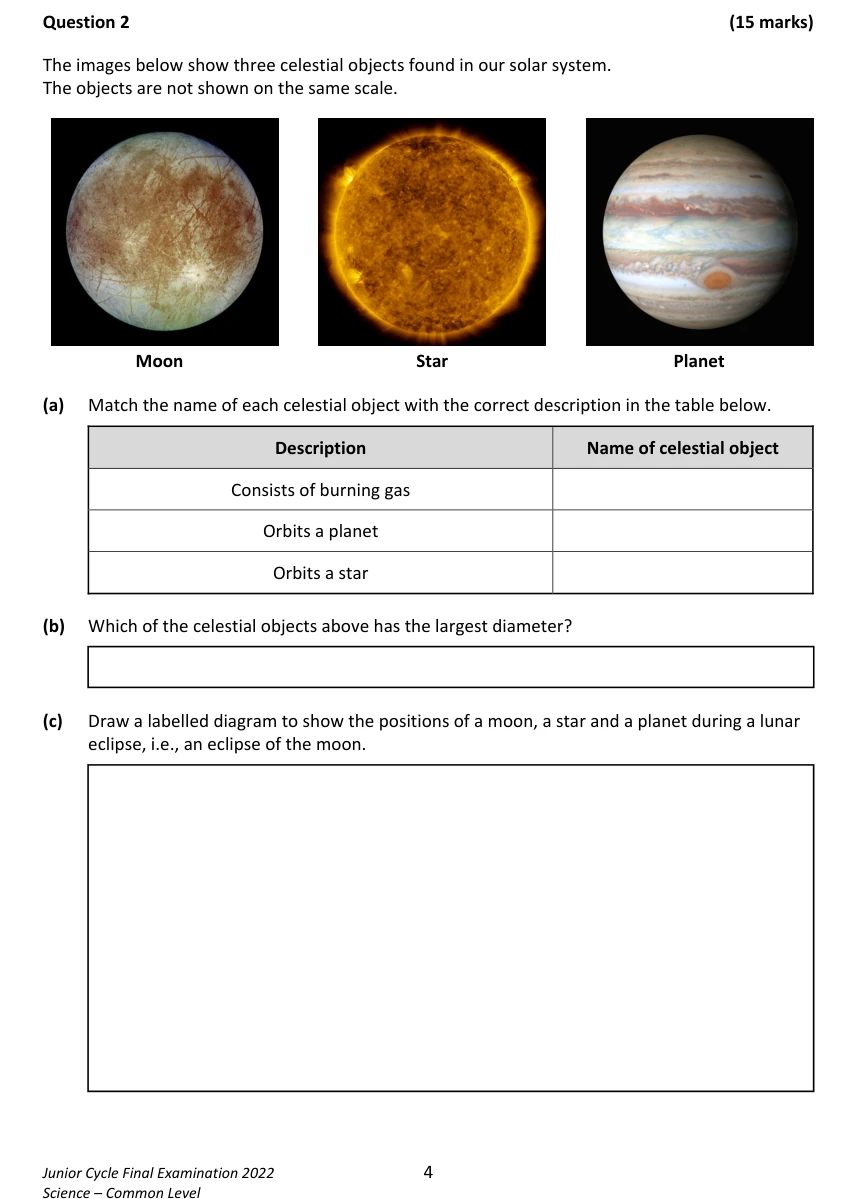
Show solutions
2022 · Question 2 · Worked solution
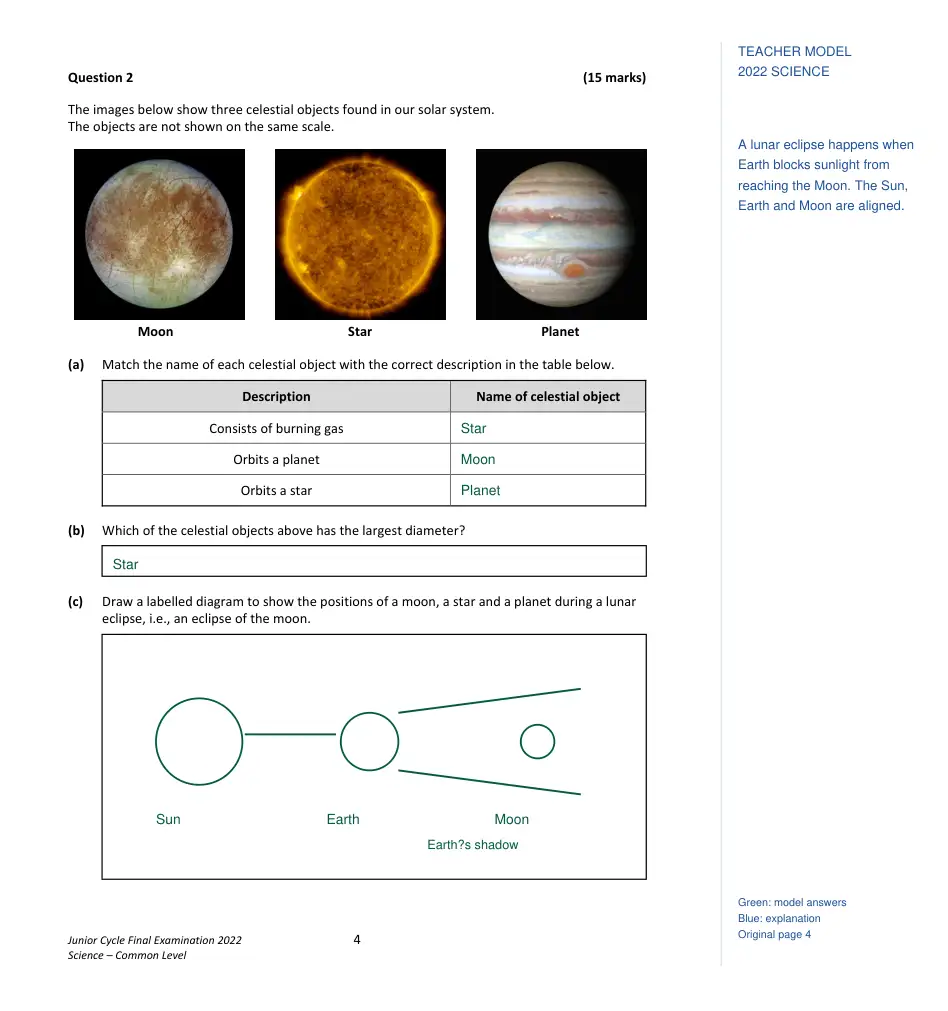
Answers are placed on the original paper, with diagram labels and blue teaching notes alongside. Teacher-completed model based on the SEC marking scheme. Added explanations are teaching notes; no answer mark allocations have been added.
Text version and further explanations
Study solution adapted from SEC marking scheme with added explanation. Teaching guidance, not an official SEC worked answer.
Working and answers are in dark text. Blue “Why this works” notes explain the key ideas beside the relevant step. On a phone, the note appears directly underneath.
a) In table order: star; moon; planet. A star produces energy by nuclear fusion: 'burning gas' is the simplified description used in this paper.
b) Star.
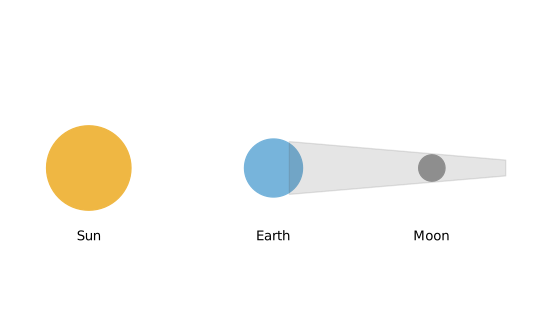
c) For a lunar eclipse, show Sun → Earth → Moon in a straight line, with the Moon in Earth's shadow. See the eclipse diagram.
Teacher sign-in and homework controls
Questions and worked solutions are open to everyone. Teachers can sign in to assign homework.
Join a class or manage your homework →