2022 · Question 13 · Section B
Sugar and material properties
Materials · States of matter · Density · Electricity · Separating mixtures
Mixed topics: some parts assess other topics. The whole question is preserved.
Open in original paper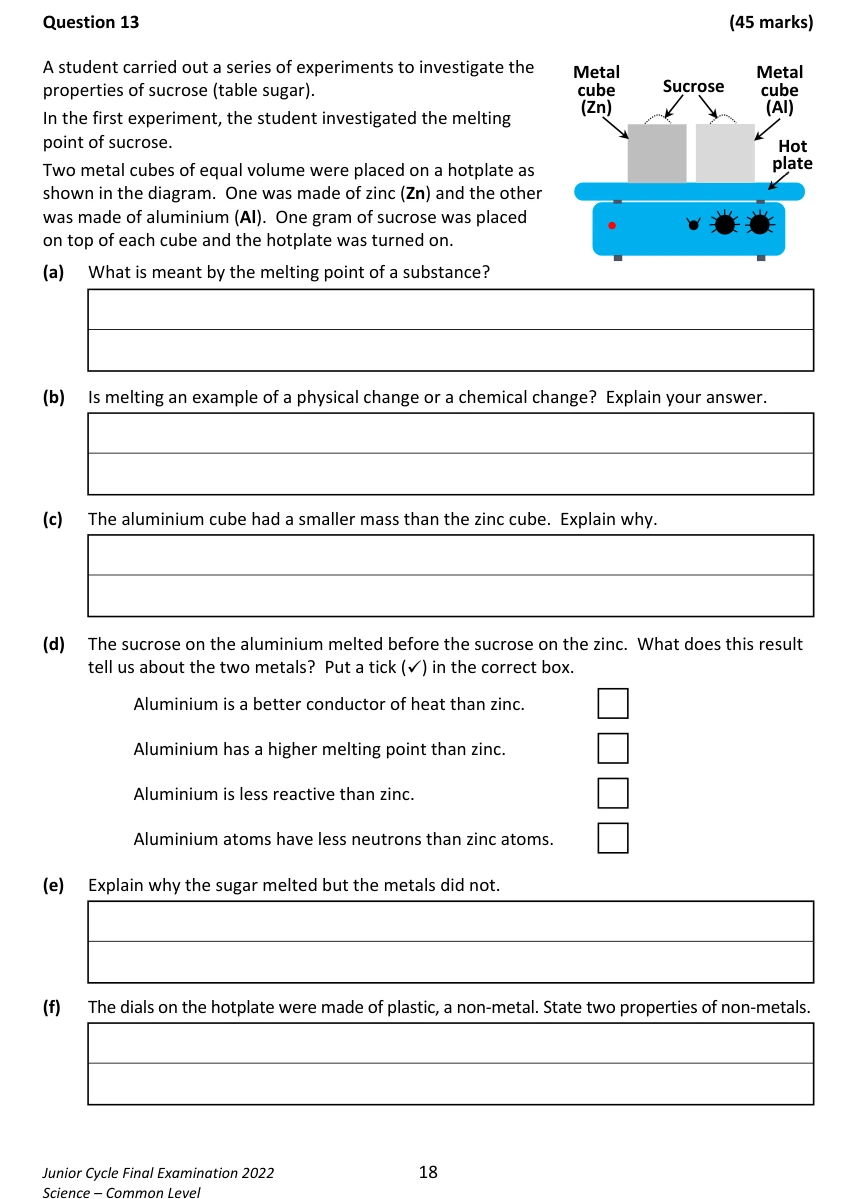
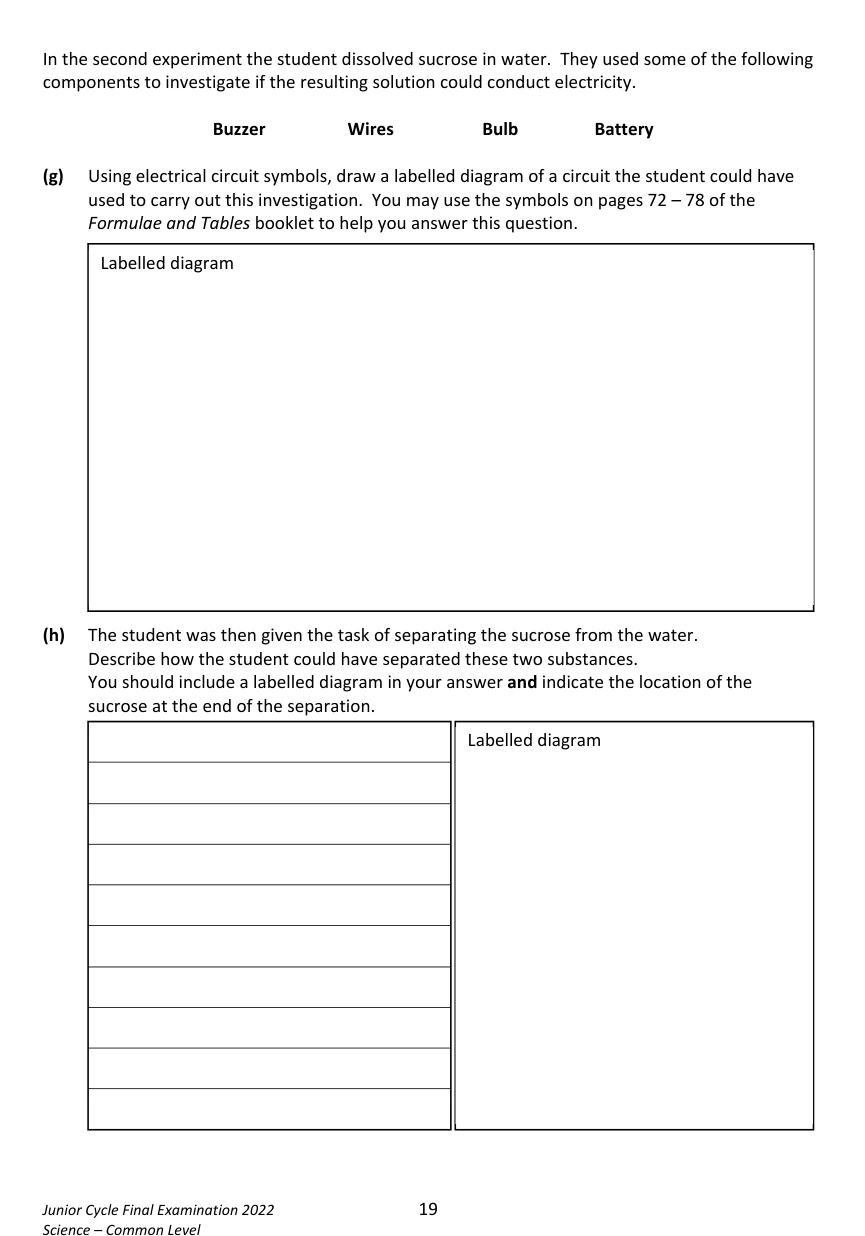
Show solutions
2022 · Question 13 · Worked solution
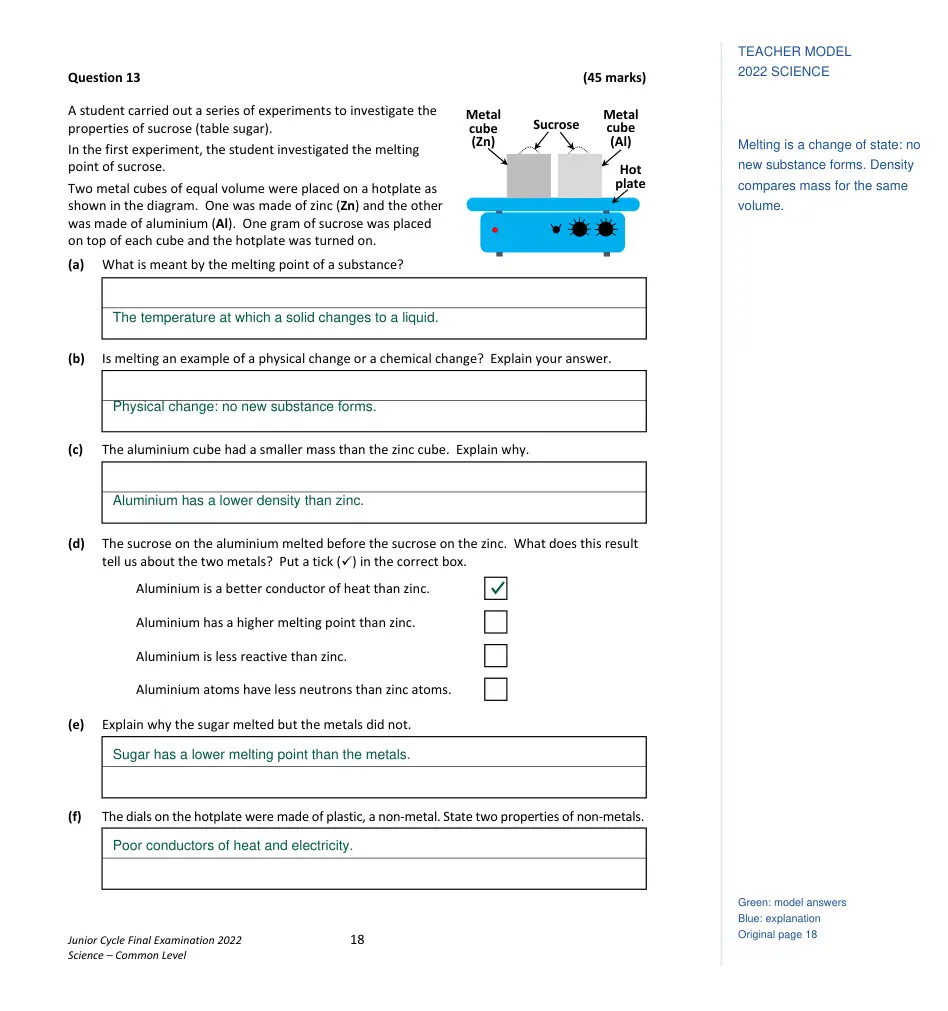
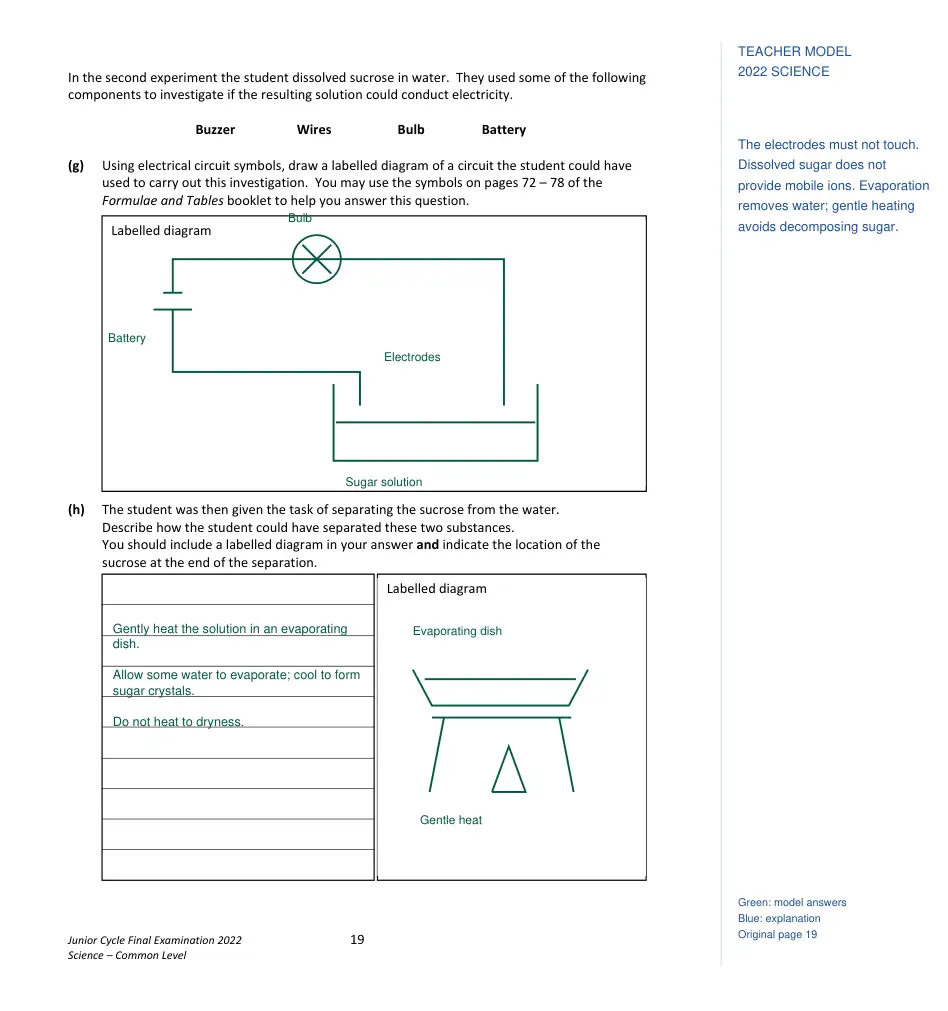
Answers are placed on the original paper, with diagram labels and blue teaching notes alongside. Teacher-completed model based on the SEC marking scheme. Added explanations are teaching notes; no answer mark allocations have been added.
Text version and further explanations
Study solution adapted from SEC marking scheme with added explanation. Teaching guidance, not an official SEC worked answer.
Working and answers are in dark text. Blue “Why this works” notes explain the key ideas beside the relevant step. On a phone, the note appears directly underneath.
a) Melting point is the temperature at which a solid changes to liquid.
b) Physical change: no new substance forms.
c) Aluminium is less dense; equal volumes therefore have different masses.
d) Aluminium is the better conductor of heat in this investigation.
e) The sugar's melting point is lower than those of the metals.
f) Plastics are generally poor electrical and thermal conductors.
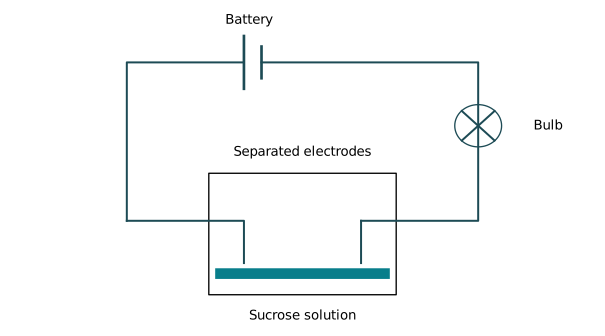
g) Connect a battery, bulb and two separated electrodes in the solution in one series circuit. The electrodes must not touch. See the circuit diagram. Sucrose solution is a poor conductor, so the bulb should not light.
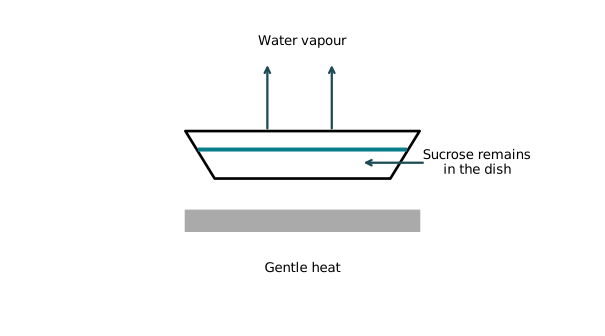
h) Gently evaporate water from the solution in an evaporating dish. Stop heating before it dries completely and allow crystals to form. Sucrose remains in the dish. See the separation diagram.
Teacher sign-in and homework controls
Questions and worked solutions are open to everyone. Teachers can sign in to assign homework.
Join a class or manage your homework →