2023 · Question 12 · Section B
Bouncing ball investigation
Energy · Graphs · Investigations · Safety
Mixed topics: some parts assess other topics. The whole question is preserved.
Open in original paper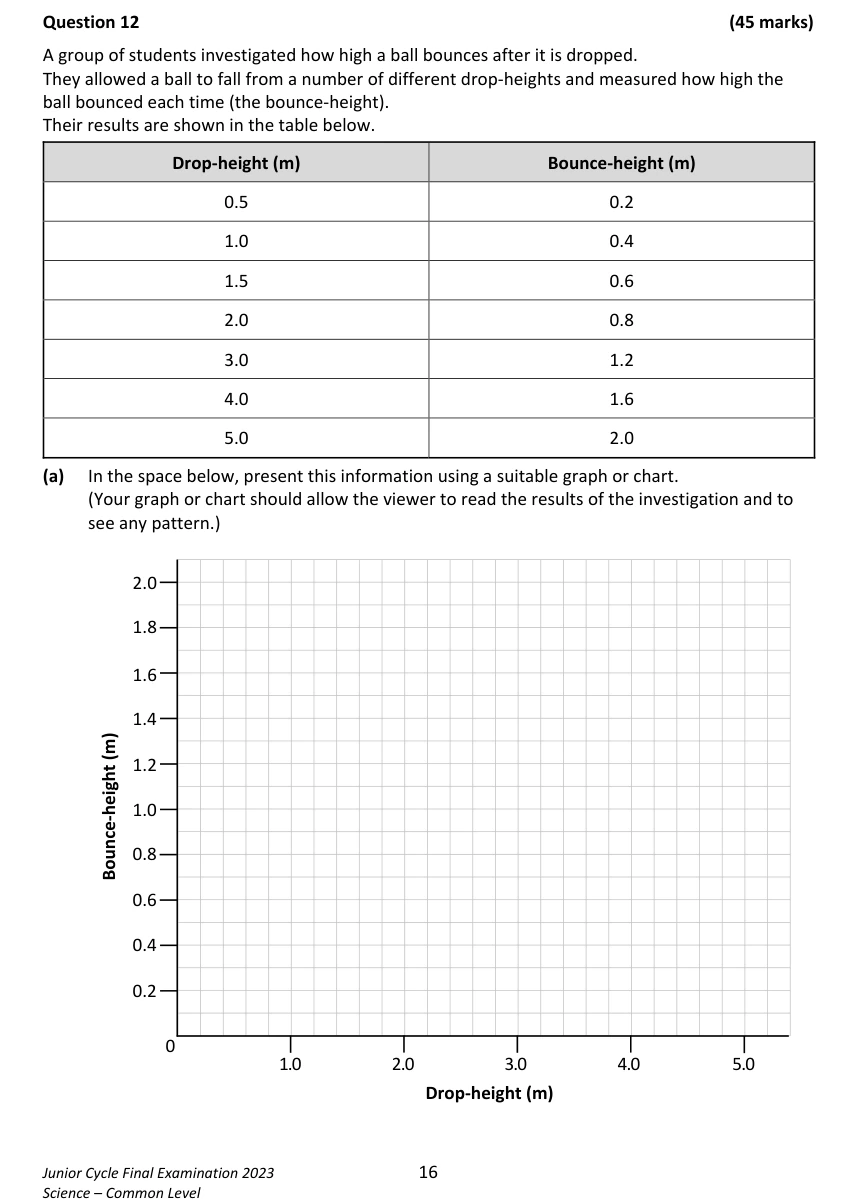
Show solutions
2023 · Question 12 · Worked solution
Answers are placed on the original paper, with diagram labels and blue teaching notes alongside. Teacher-completed model based on the SEC marking scheme. Added explanations are teaching notes; no answer mark allocations have been added.
Text version and further explanations
Study solution adapted from SEC marking scheme with added explanation. Teaching guidance, not an official SEC worked answer.
Working and answers are in dark text. Blue “Why this works” notes explain the key ideas beside the relevant step. On a phone, the note appears directly underneath.
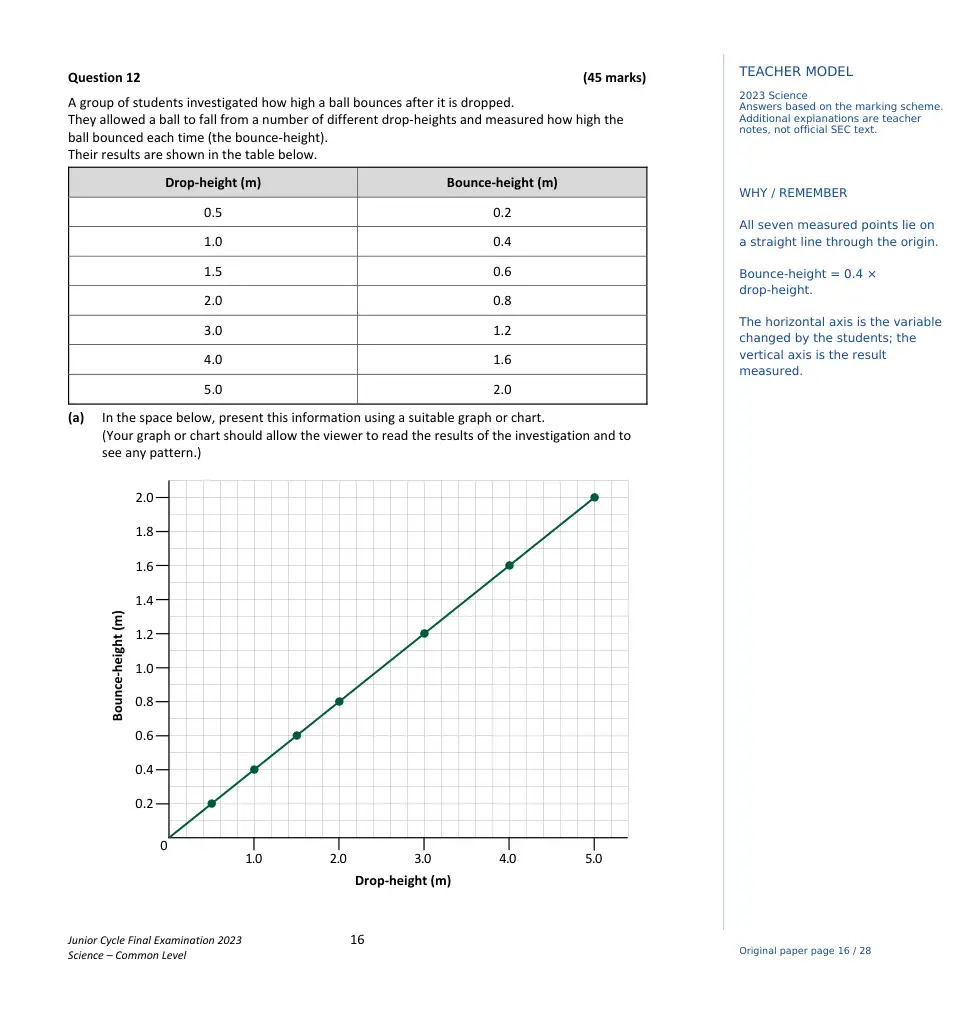
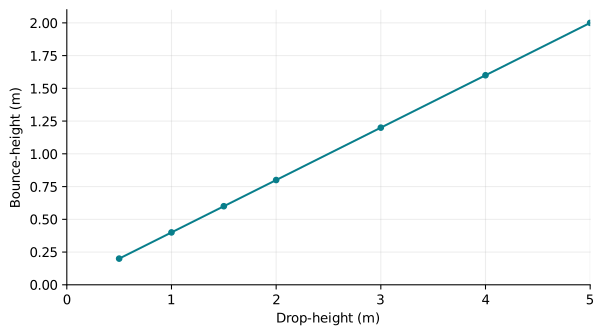
a) Plot drop-height horizontally and bounce-height vertically. All seven points lie on bounce-height = 0.4 × drop-height; see graph.
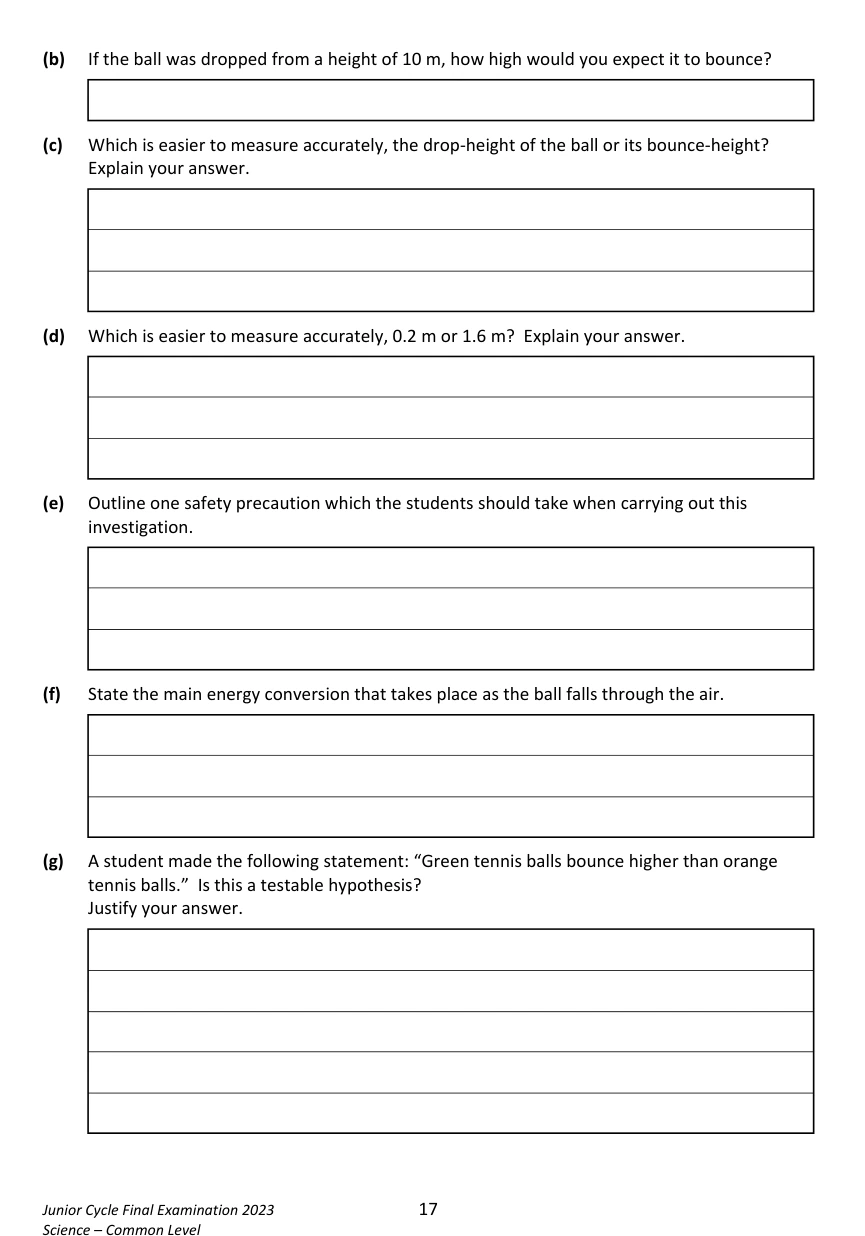
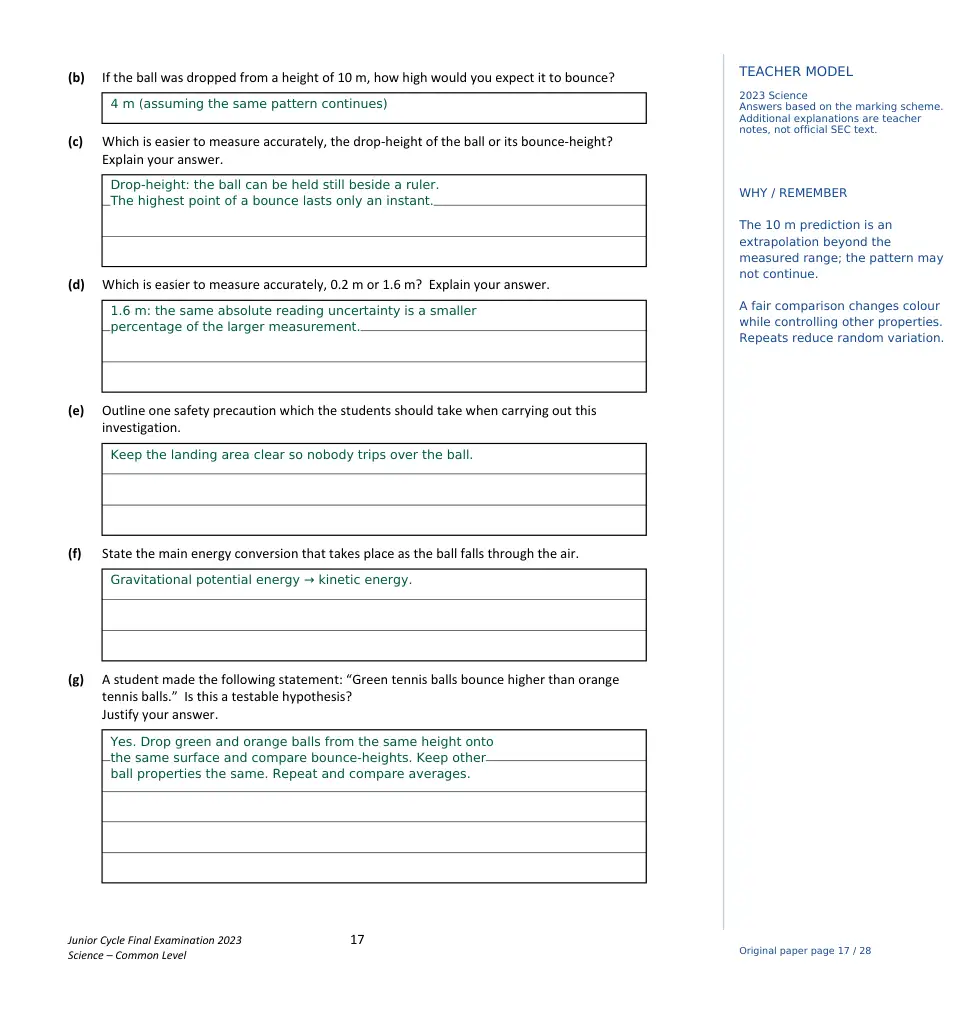
b) Extrapolating the pattern: bounce-height = 0.4 × 10 = 4 m. This prediction assumes the same pattern continues beyond the measured range.
c) Drop-height: the ball can be held still beside a ruler, while the maximum bounce-height is brief and harder to observe.
d) 1.6 m: the same absolute reading uncertainty is a smaller percentage of a larger height.
e) Keep the landing area clear so nobody is struck.
f) Gravitational potential energy changes to kinetic energy during the fall.
g) Yes. Drop green and orange tennis balls from the same height onto the same surface, measure their bounce-heights and repeat. Control other differences between the balls as far as possible.
Teacher sign-in and homework controls
Questions and worked solutions are open to everyone. Teachers can sign in to assign homework.
Join a class or manage your homework →