2023 · Question 15 · Section B
Breathing model and the heart
Respiration and breathing · Circulation · Microorganisms · Energy in reactions · Scientific models
Mixed topics: some parts assess other topics. The whole question is preserved.
Open in original paper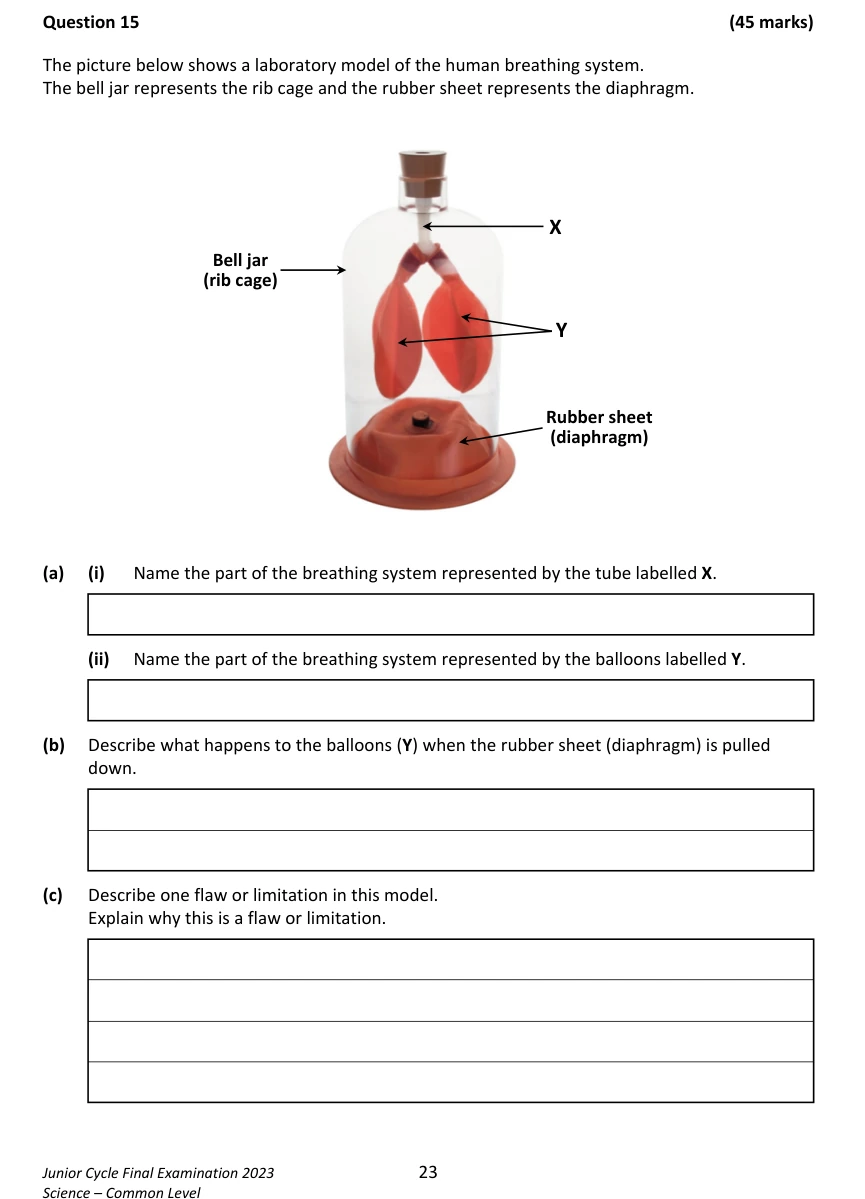
Show solutions
2023 · Question 15 · Worked solution
Answers are placed on the original paper, with diagram labels and blue teaching notes alongside. Teacher-completed model based on the SEC marking scheme. Added explanations are teaching notes; no answer mark allocations have been added.
Text version and further explanations
Study solution adapted from SEC marking scheme with added explanation. Teaching guidance, not an official SEC worked answer.
Working and answers are in dark text. Blue “Why this works” notes explain the key ideas beside the relevant step. On a phone, the note appears directly underneath.
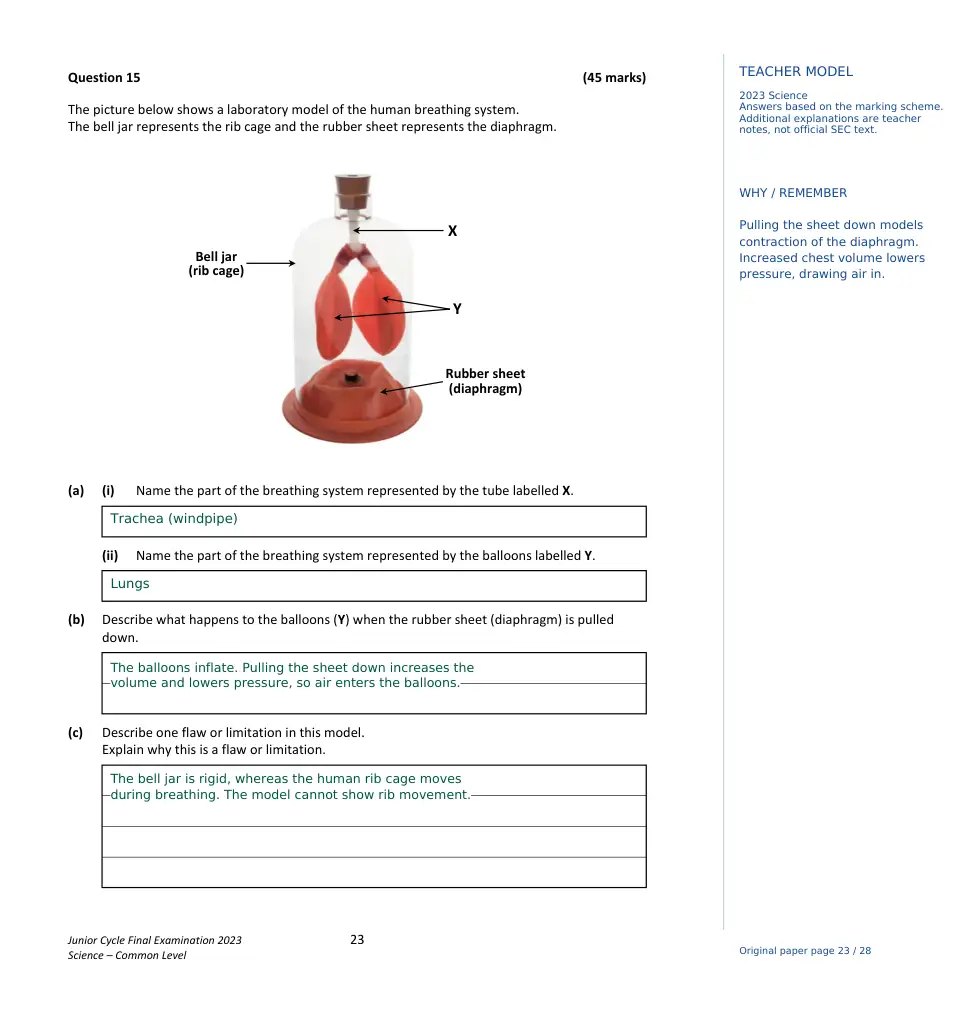
a) i) X represents the trachea. ii) Y represents the lungs.
b) The balloons inflate. Pulling the sheet down increases volume and lowers pressure, drawing air in.
c) The bell jar is rigid, but the real rib cage moves during breathing.
d) i) Oxygen enters blood from the lungs and is used in respiration. ii) Most nitrogen is not used by the body and is breathed out again.
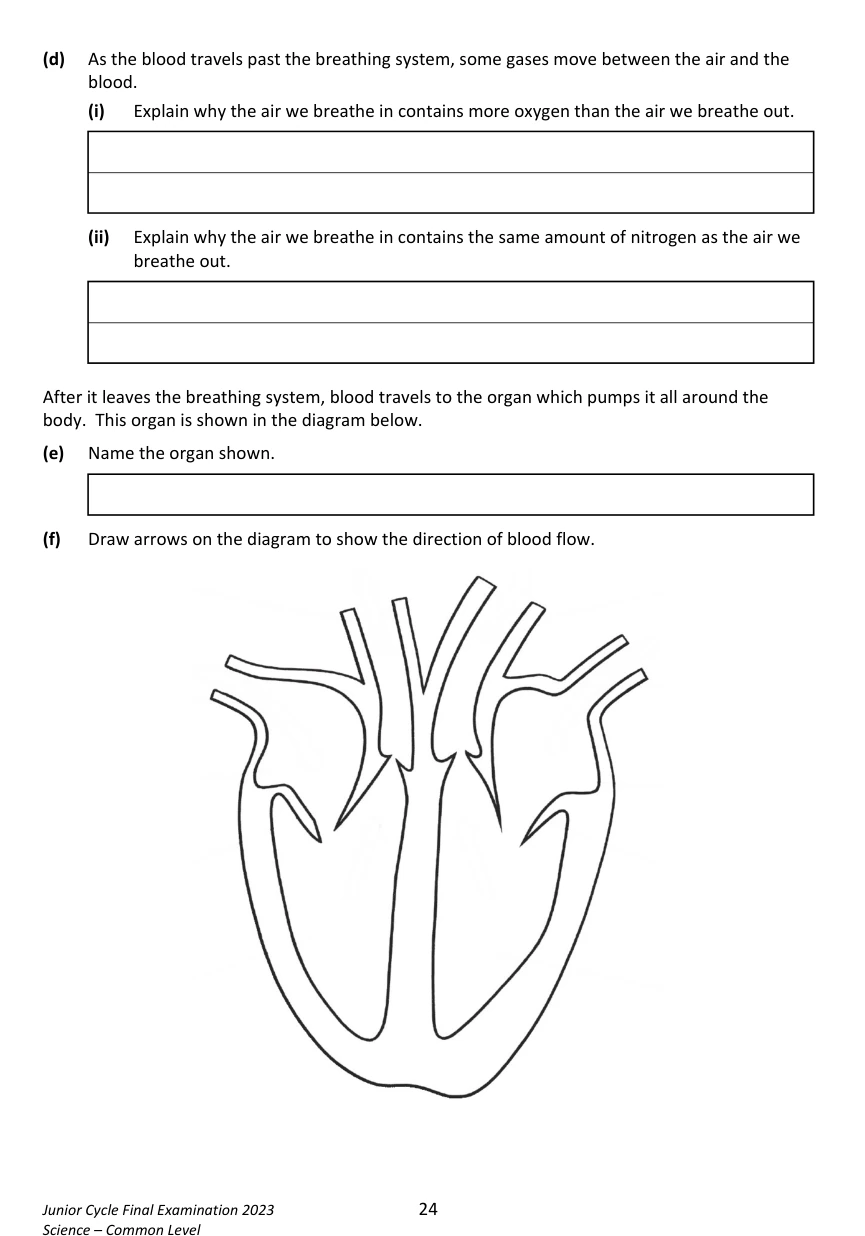
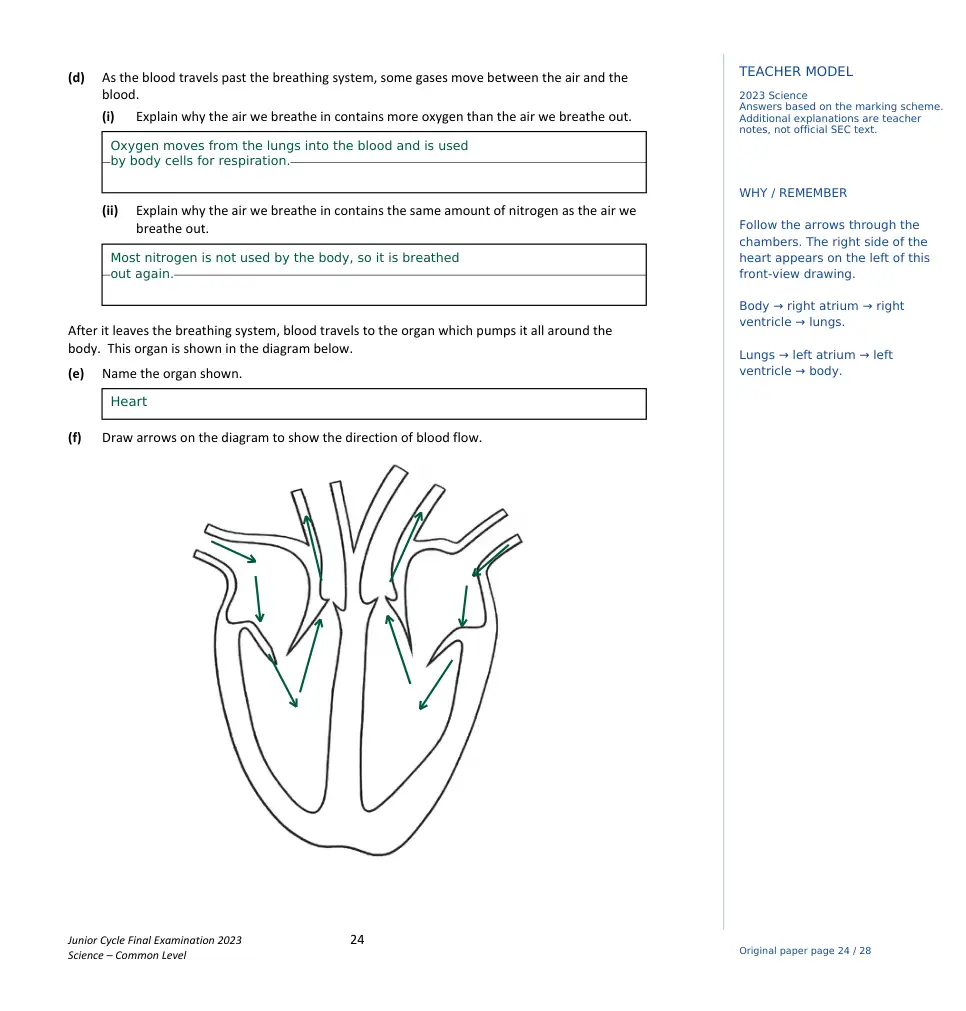
e) Heart.
f) Right side: body → right atrium → right ventricle → lungs. Left side: lungs → left atrium → left ventricle → body.
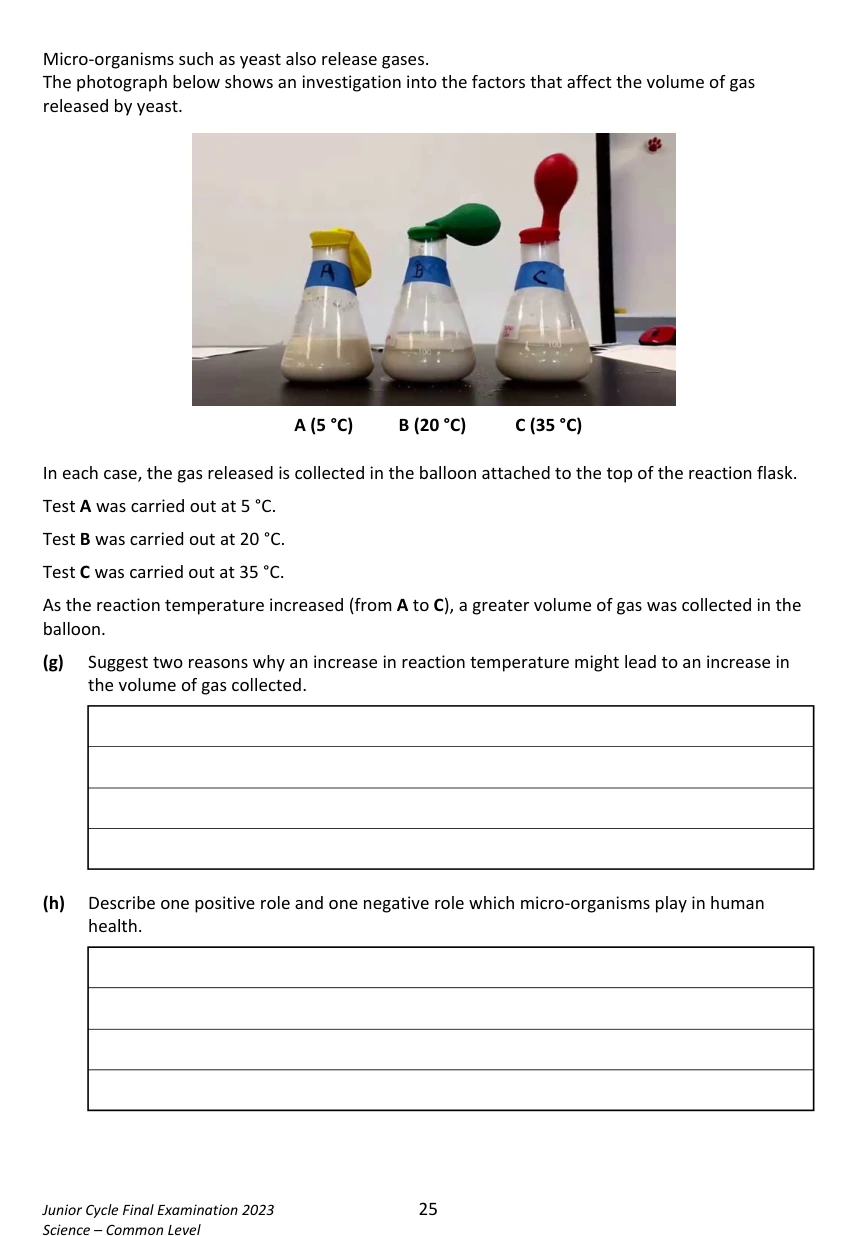
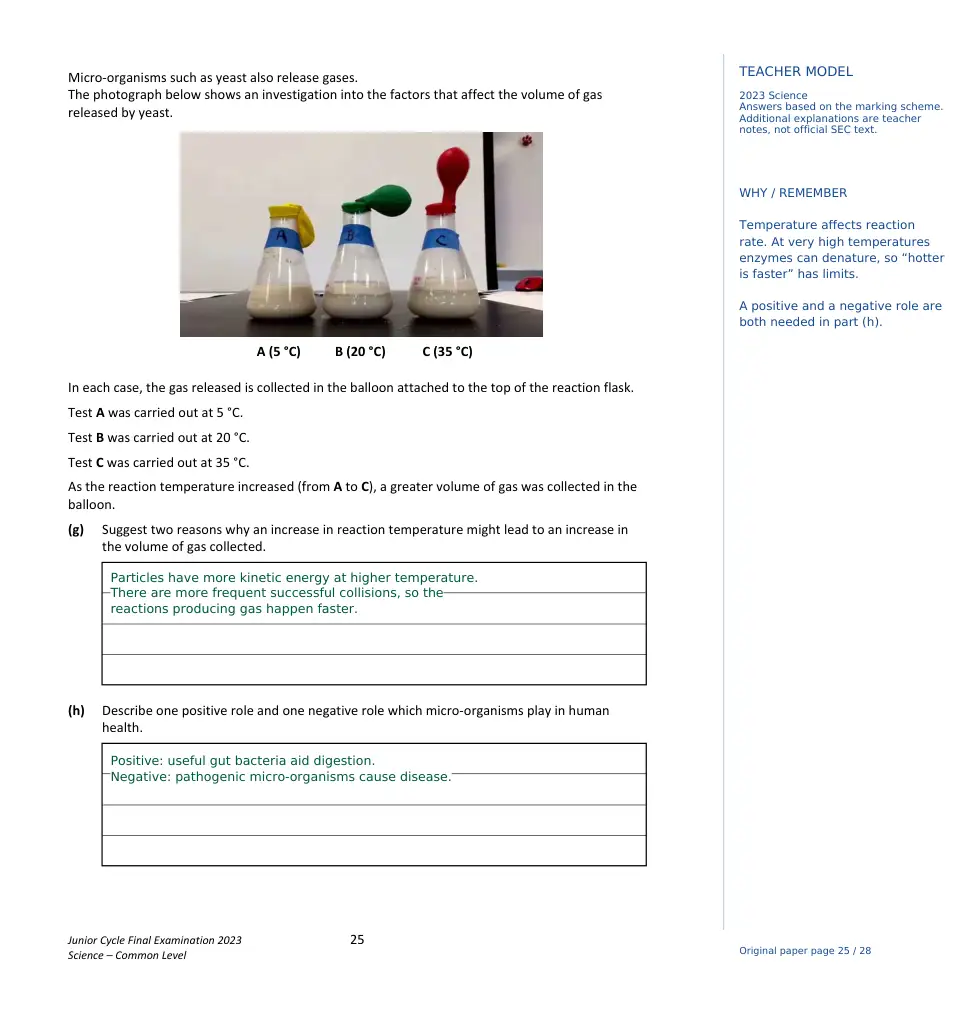
g) Higher temperature gives particles more kinetic energy, causing more frequent successful collisions and a faster reaction.
h) Helpful: gut bacteria aid digestion. Harmful: some bacteria cause disease.
Teacher sign-in and homework controls
Questions and worked solutions are open to everyone. Teachers can sign in to assign homework.
Join a class or manage your homework →