2024 · Question 16 · Section B
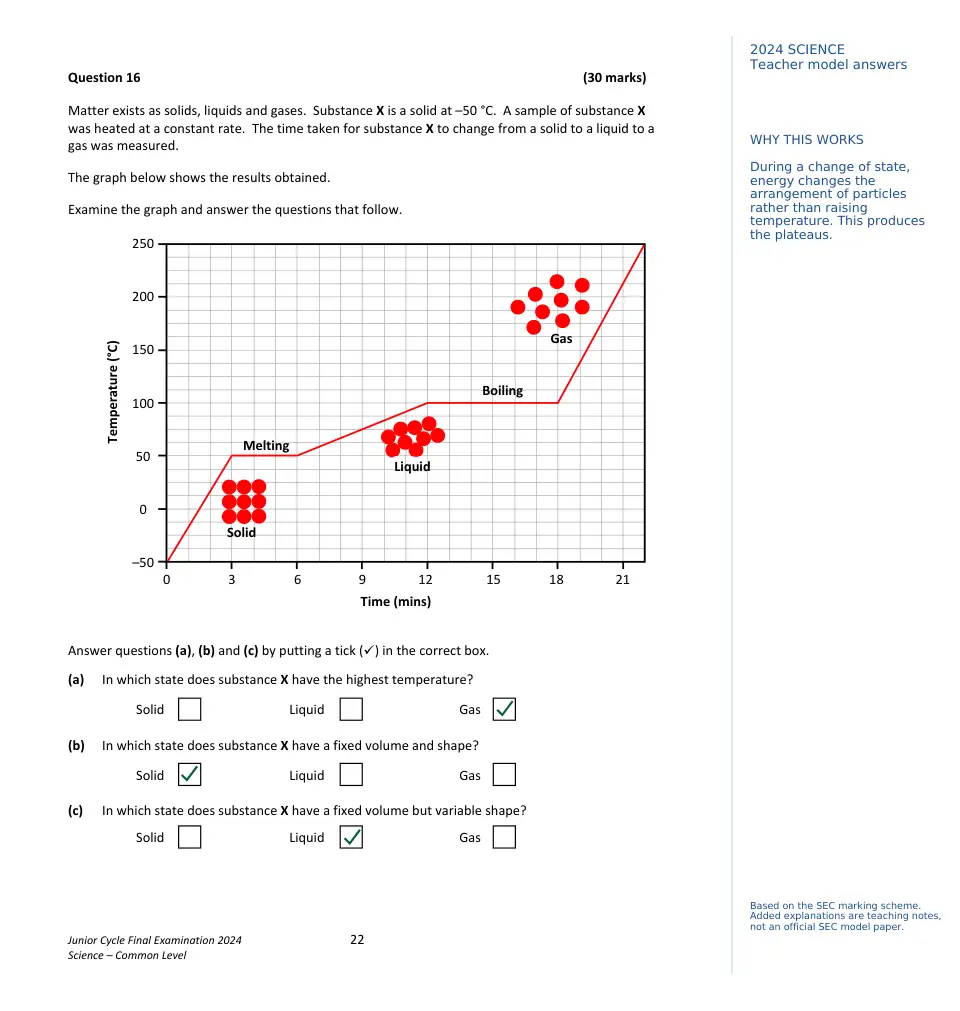
Heating curve
States of matter · Energy in reactions · Graphs
Mixed topics: some parts assess other topics. The whole question is preserved.
Open in original paper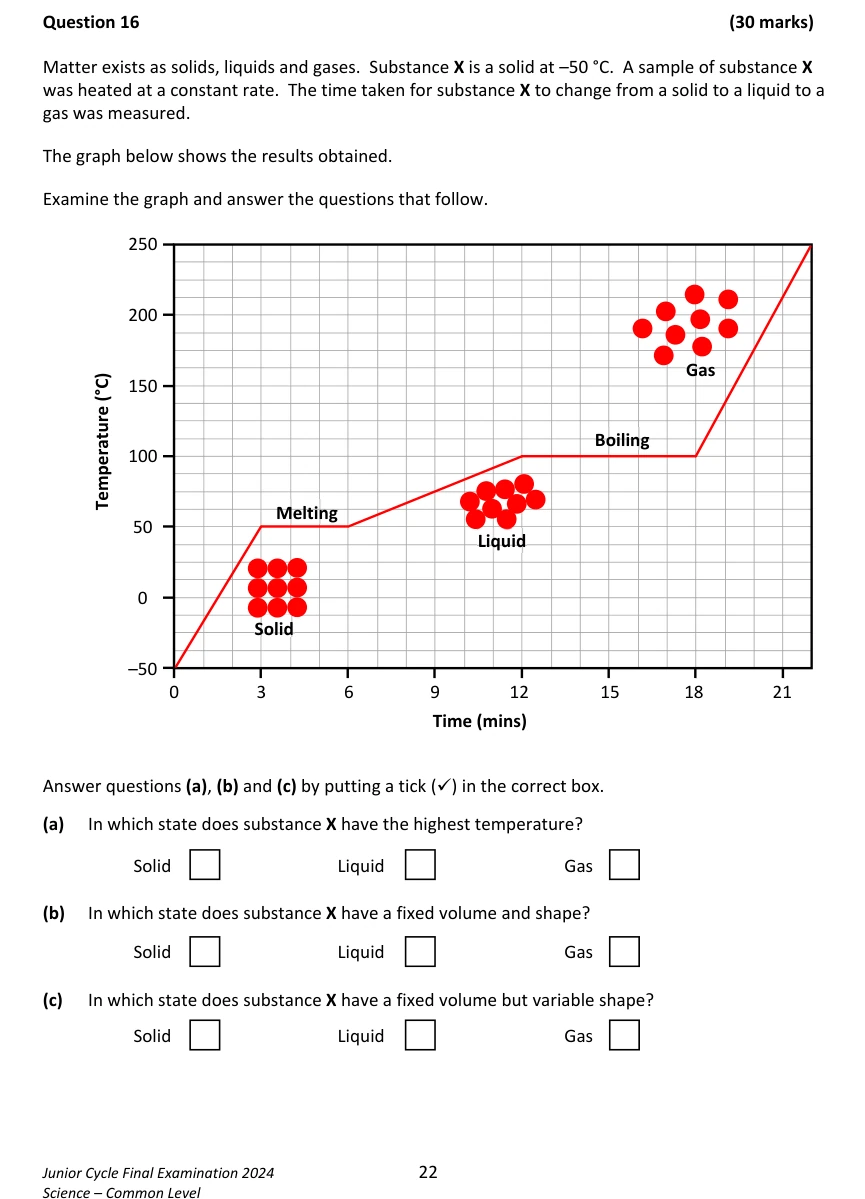
Show solutions
2024 · Question 16 · Worked solution
Answers are placed on the original paper, with diagram labels and blue teaching notes alongside. Teacher-completed model based on the SEC marking scheme. Added explanations are teaching notes; no answer mark allocations have been added.
Text version and further explanations
Study solution adapted from SEC marking scheme with added explanation. Teaching guidance, not an official SEC worked answer.
Working and answers are in dark text. Blue “Why this works” notes explain the key ideas beside the relevant step. On a phone, the note appears directly underneath.
a) Gas.
b) Solid: fixed shape and volume.
c) Liquid: fixed volume but takes the container's shape.
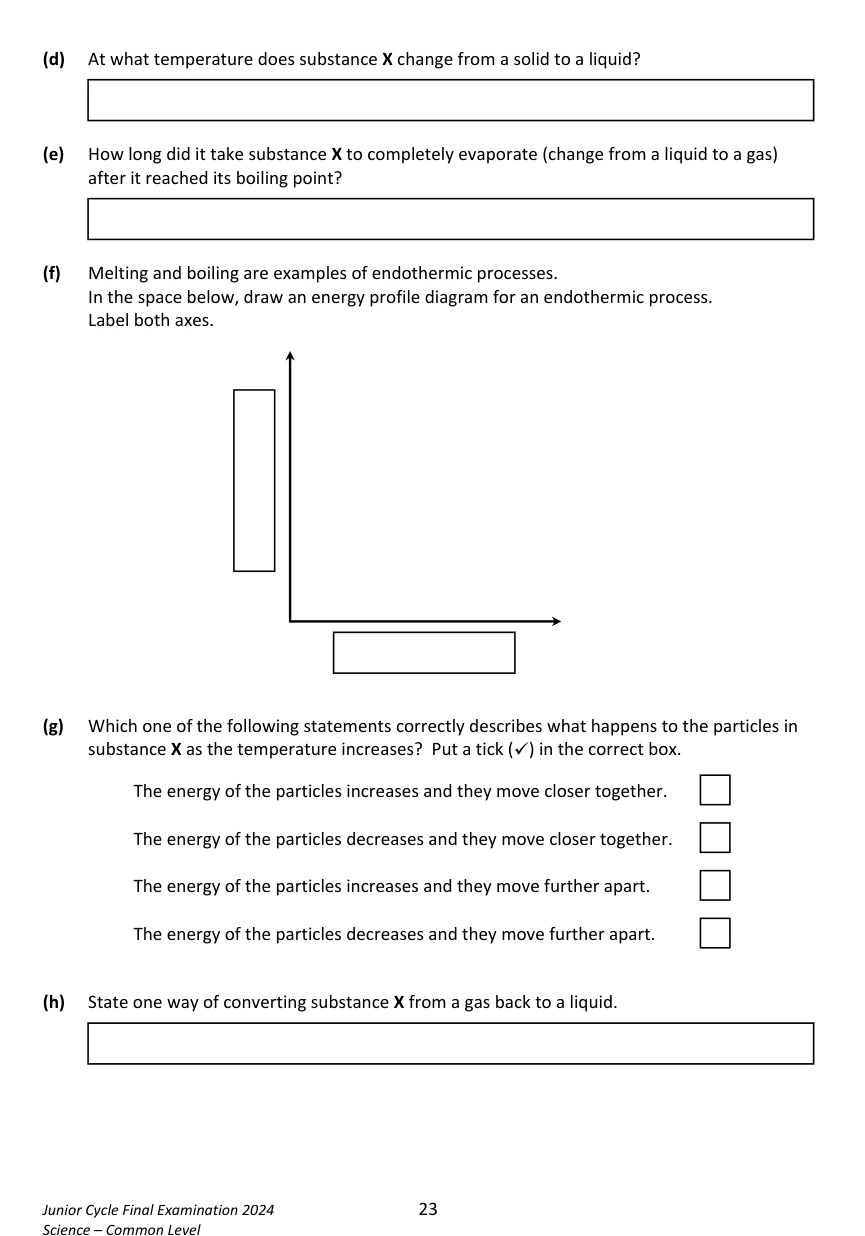
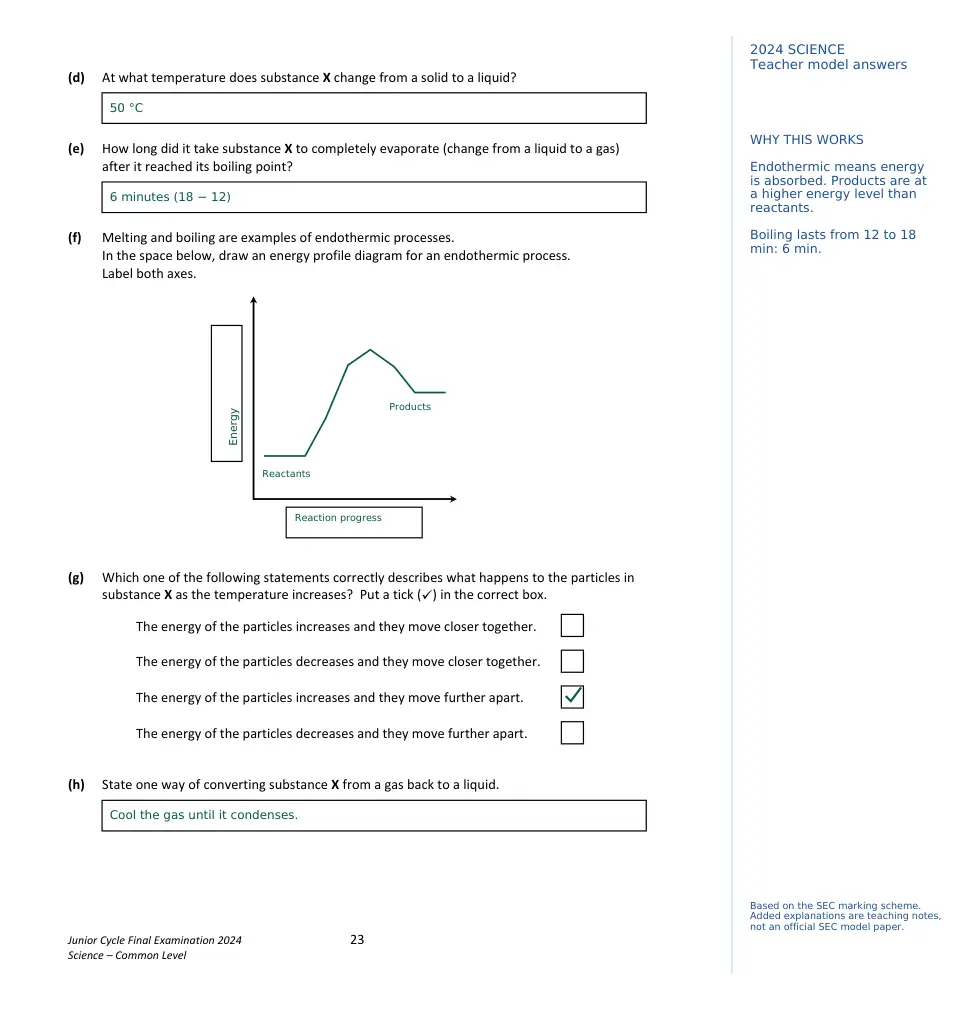
d) 50 °C, the melting plateau.
e) 6 minutes, from the beginning to the end of the boiling plateau.
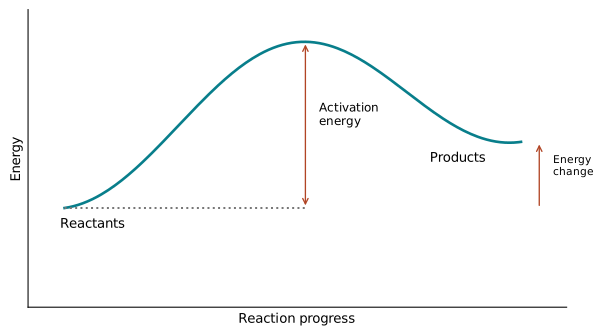
f) Endothermic profile: products above reactants; axes labelled energy and reaction progress. See diagram.
g) The particles gain energy and move further apart, as described by the correct option.
h) Cool the gas until it condenses.
Teacher sign-in and homework controls
Questions and worked solutions are open to everyone. Teachers can sign in to assign homework.
Join a class or manage your homework →