2025 · Question 12 · Section B
Surface area, digestion and reactions
Measurement · Digestion · Rates of reaction · Chemical reactions · Investigations · Graphs
Mixed topics: some parts assess other topics. The whole question is preserved.
Open in original paper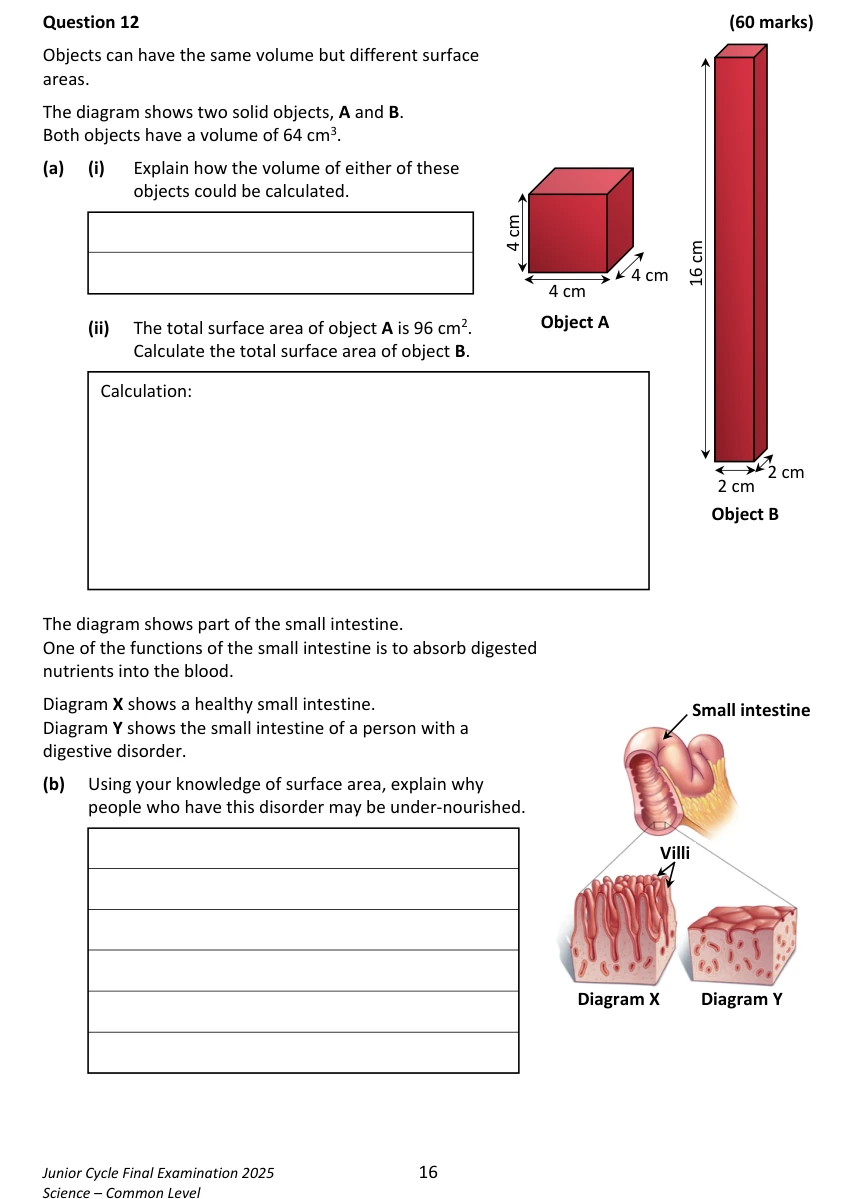
Show solutions
2025 · Question 12 · Worked solution
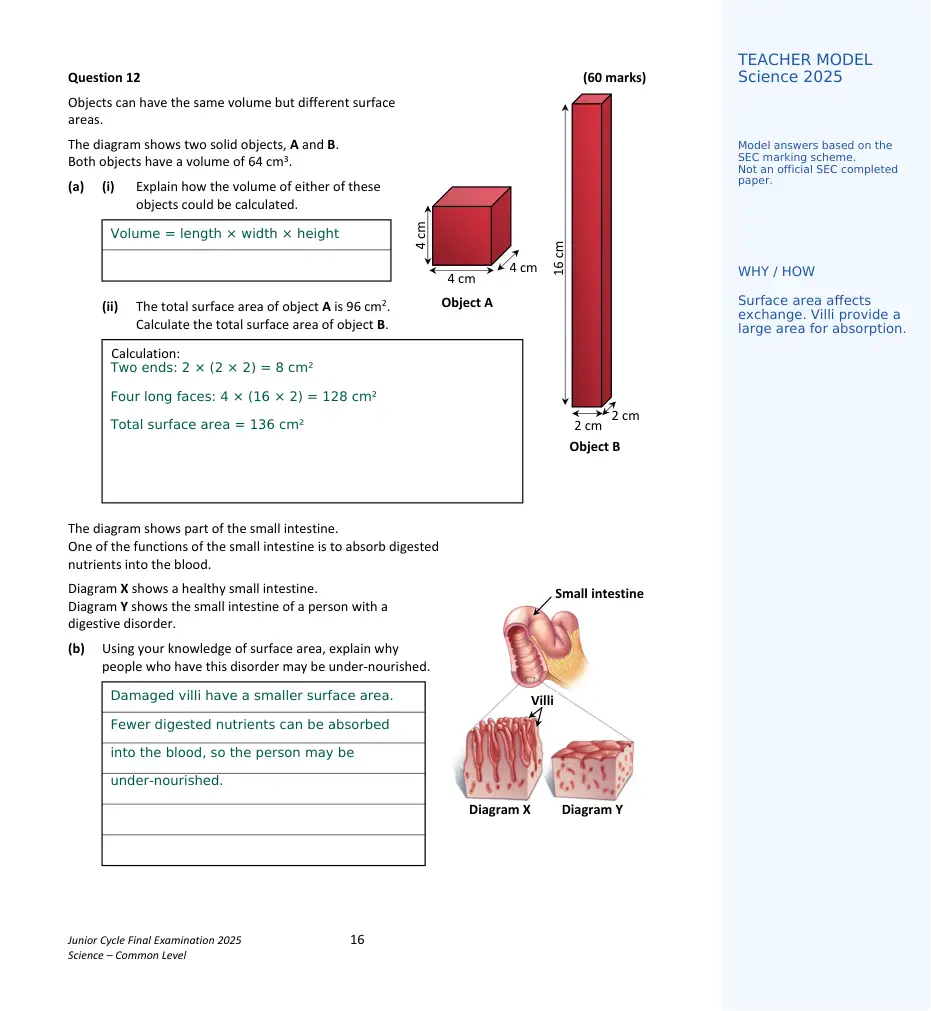
Answers are placed on the original paper, with diagram labels and blue teaching notes alongside. Teacher-completed model based on the SEC marking scheme. Added explanations are teaching notes; no answer mark allocations have been added.
Text version and further explanations
Study solution adapted from SEC marking scheme with added explanation. Teaching guidance, not an official SEC worked answer.
Working and answers are in dark text. Blue “Why this works” notes explain the key ideas beside the relevant step. On a phone, the note appears directly underneath.
a) i) Volume = length × width × height. ii) Object B: two ends give 2 × (2 × 2) = 8 cm²; four long faces give 4 × (16 × 2) = 128 cm². Total = 136 cm².
b) Damaged or smaller villi reduce surface area, so fewer digested nutrients can be absorbed.
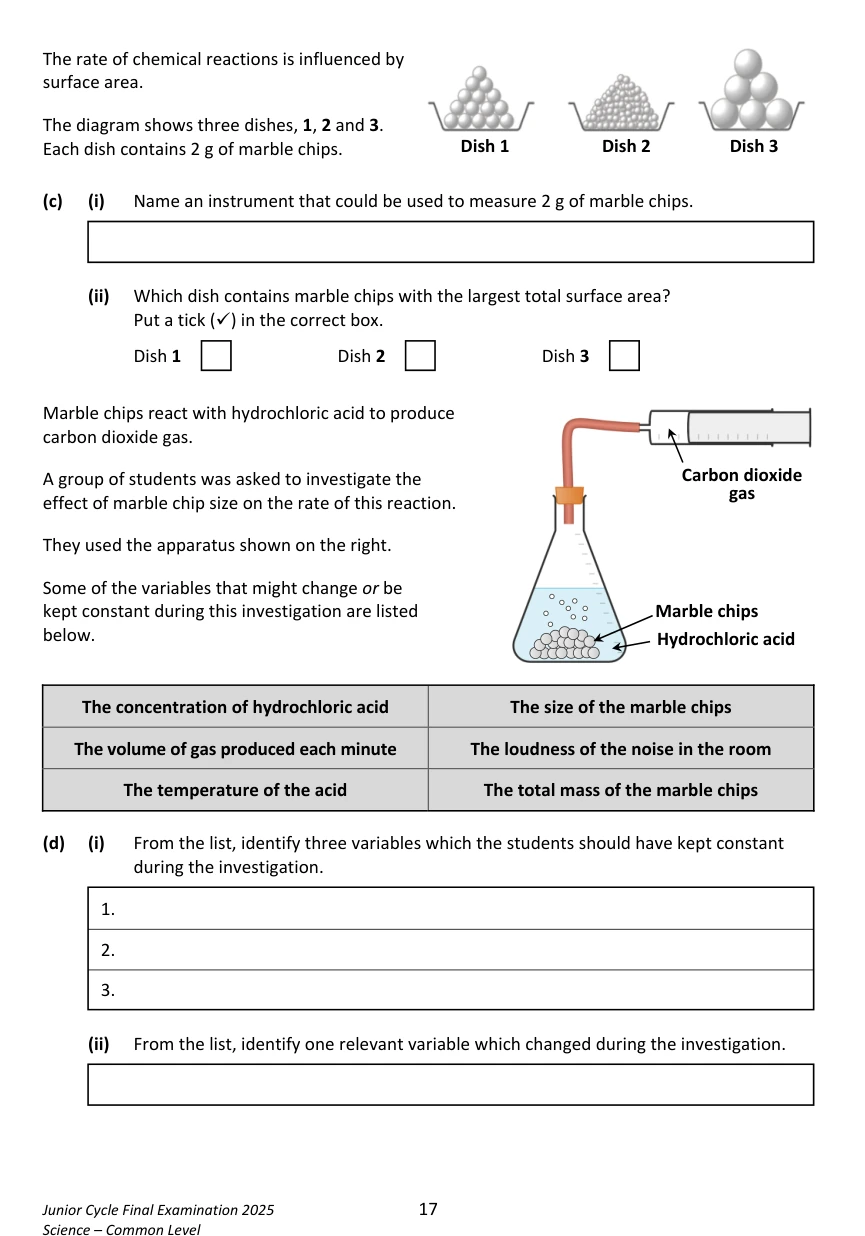
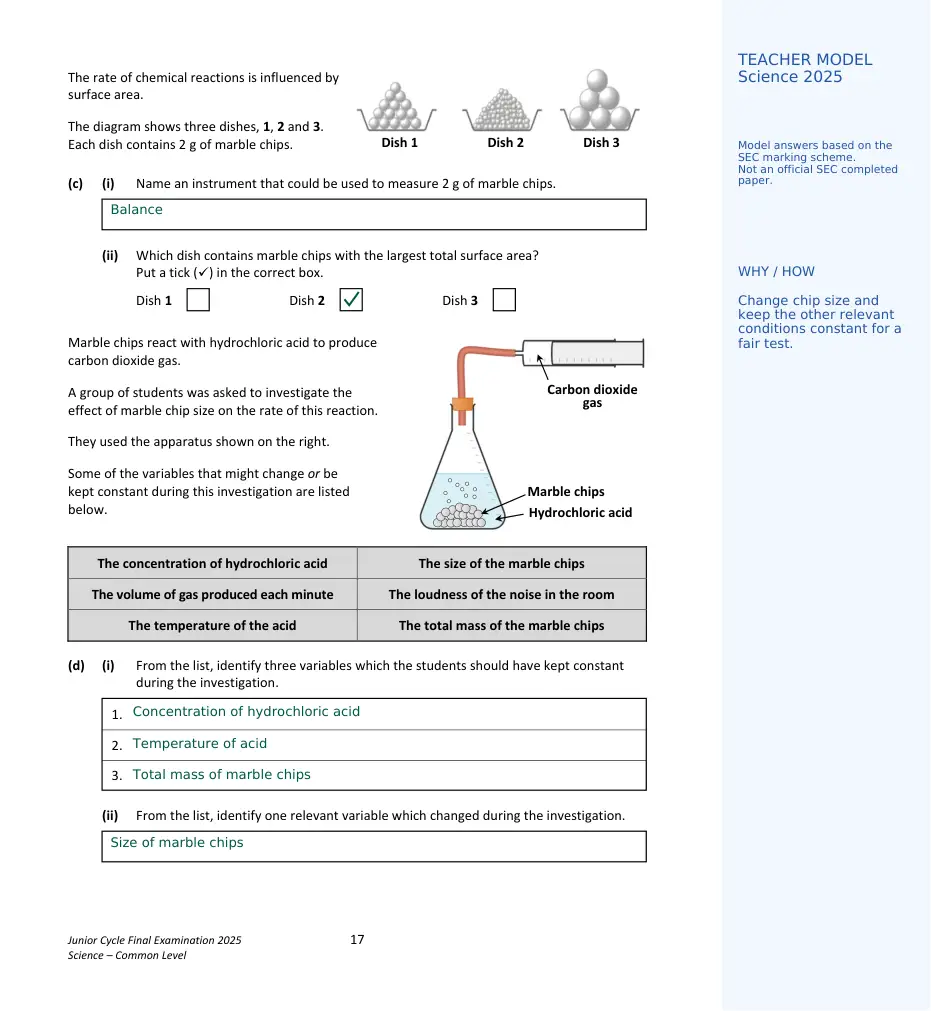
c) i) Balance. ii) Dish 2.
d) i) Tick acid concentration, acid temperature and total mass of marble chips. ii) The volume of gas collected each minute is the measured outcome; chip size is changed.
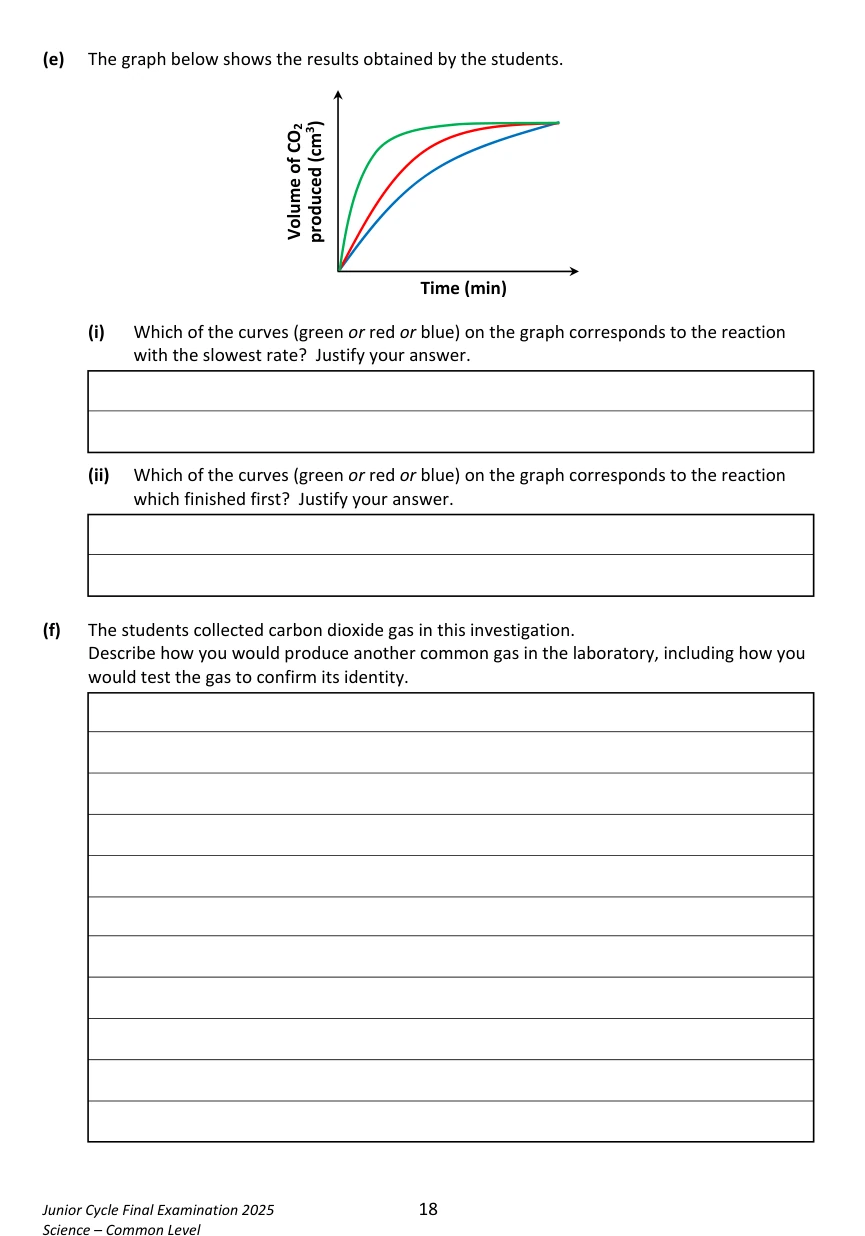
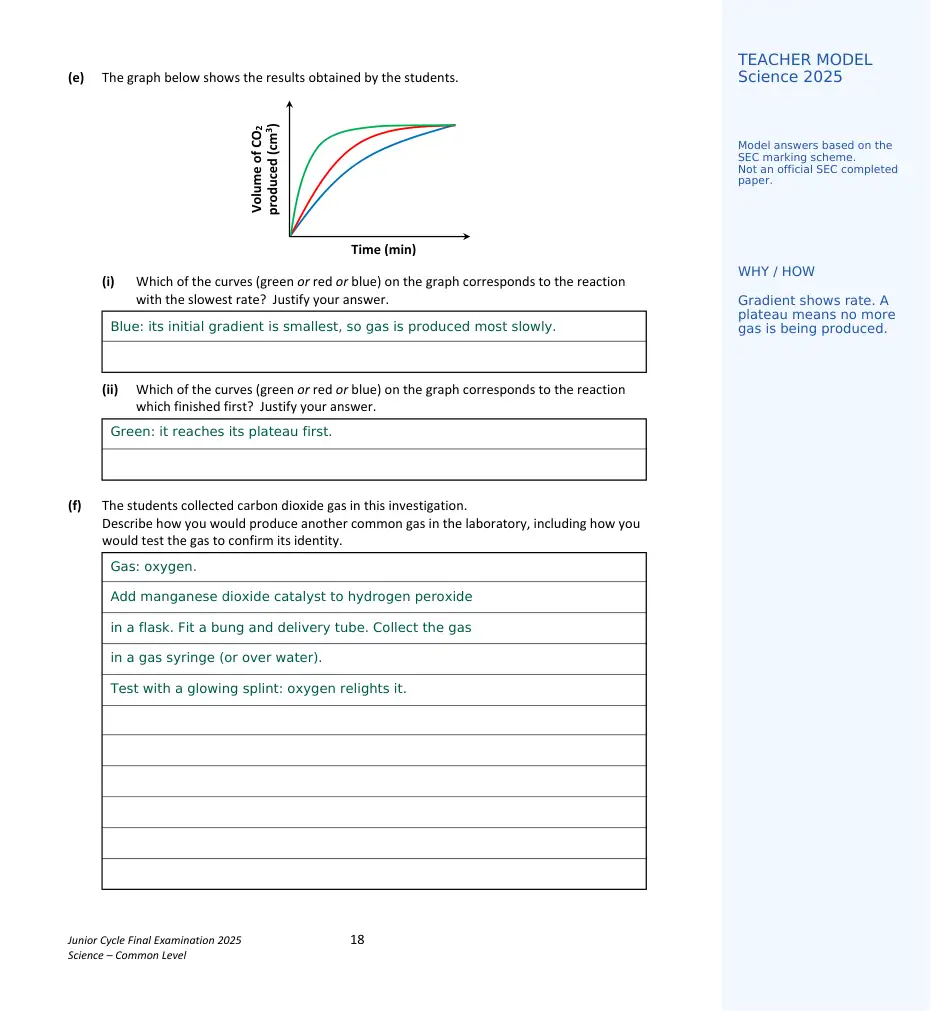
e) i) Blue: smallest initial gradient, so slowest rate. ii) Green: it levels off first.
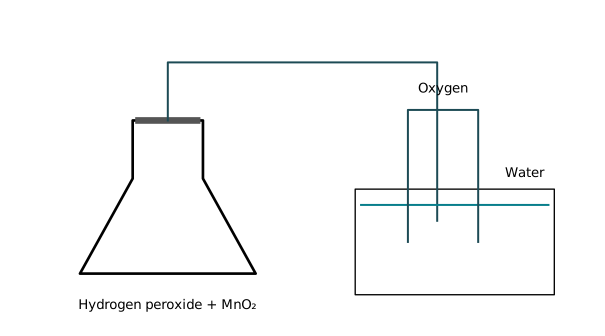
f) Oxygen example: add manganese dioxide catalyst to hydrogen peroxide in a flask; collect the gas through a delivery tube. Oxygen relights a glowing splint. Hydrogen example: react magnesium with dilute hydrochloric acid; collect gas in a test tube. A small sample gives a squeaky pop with a lit splint. See the labelled gas apparatus.
Teacher sign-in and homework controls
Questions and worked solutions are open to everyone. Teachers can sign in to assign homework.
Join a class or manage your homework →