2025 · Question 13 · Section B
Planets, Moon and technology
Solar system · Earth and Moon · Space exploration · Ethics · Graphs
Mixed topics: some parts assess other topics. The whole question is preserved.
Open in original paper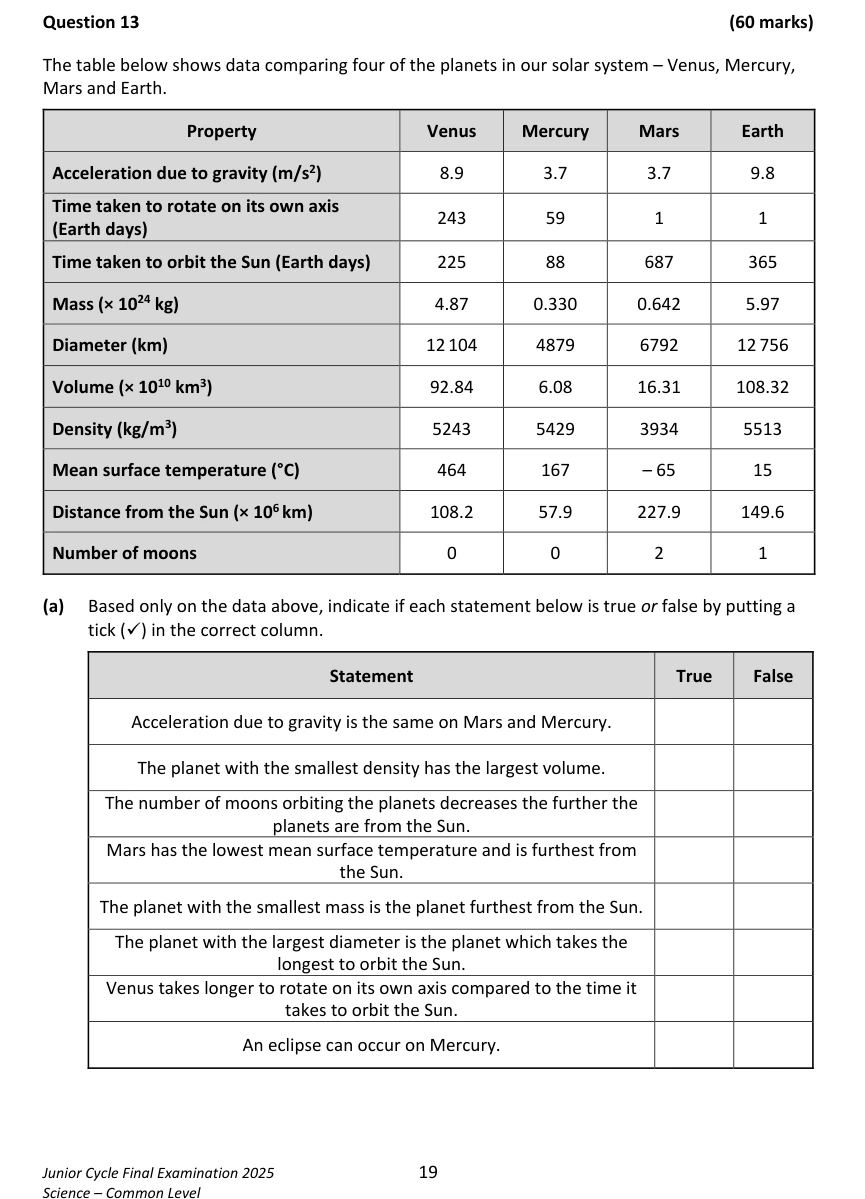
Show solutions
2025 · Question 13 · Worked solution
Answers are placed on the original paper, with diagram labels and blue teaching notes alongside. Teacher-completed model based on the SEC marking scheme. Added explanations are teaching notes; no answer mark allocations have been added.
Text version and further explanations
Study solution adapted from SEC marking scheme with added explanation. Teaching guidance, not an official SEC worked answer.
Working and answers are in dark text. Blue “Why this works” notes explain the key ideas beside the relevant step. On a phone, the note appears directly underneath.
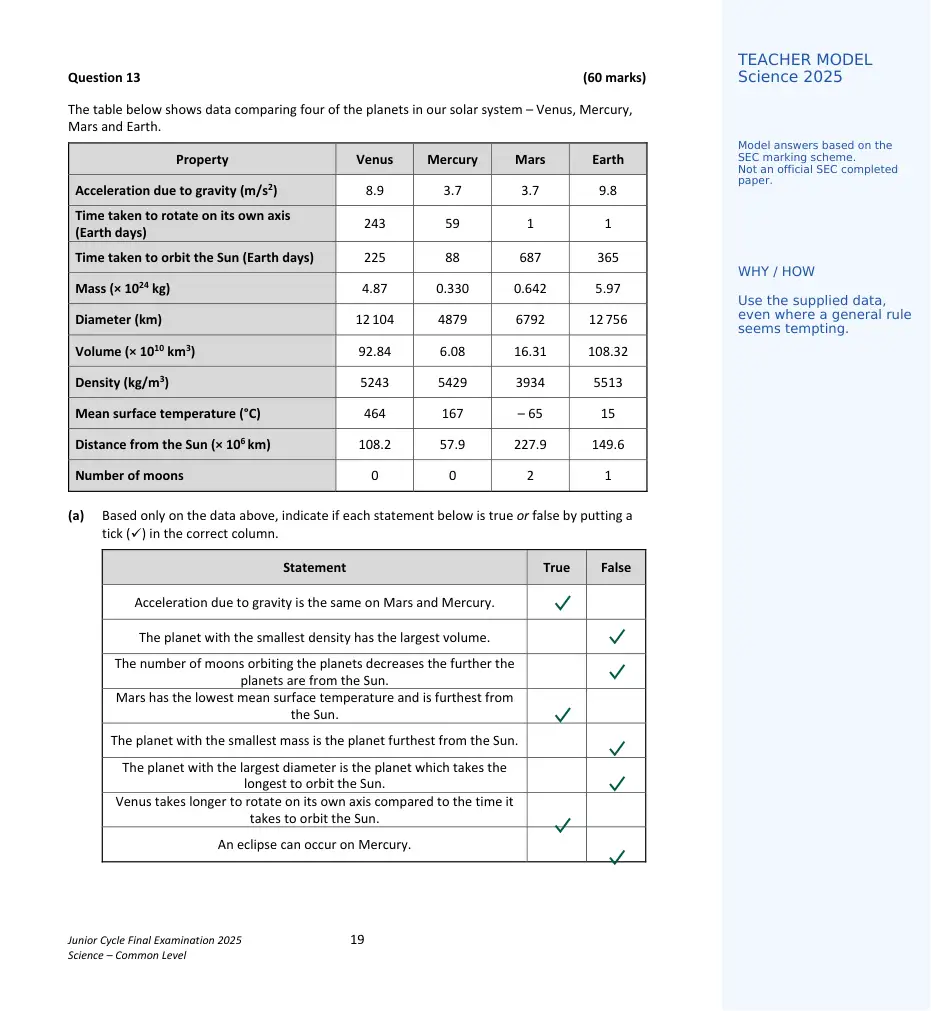
a) In order: true; false; false; true; false; false; true; false. Use the supplied table only.
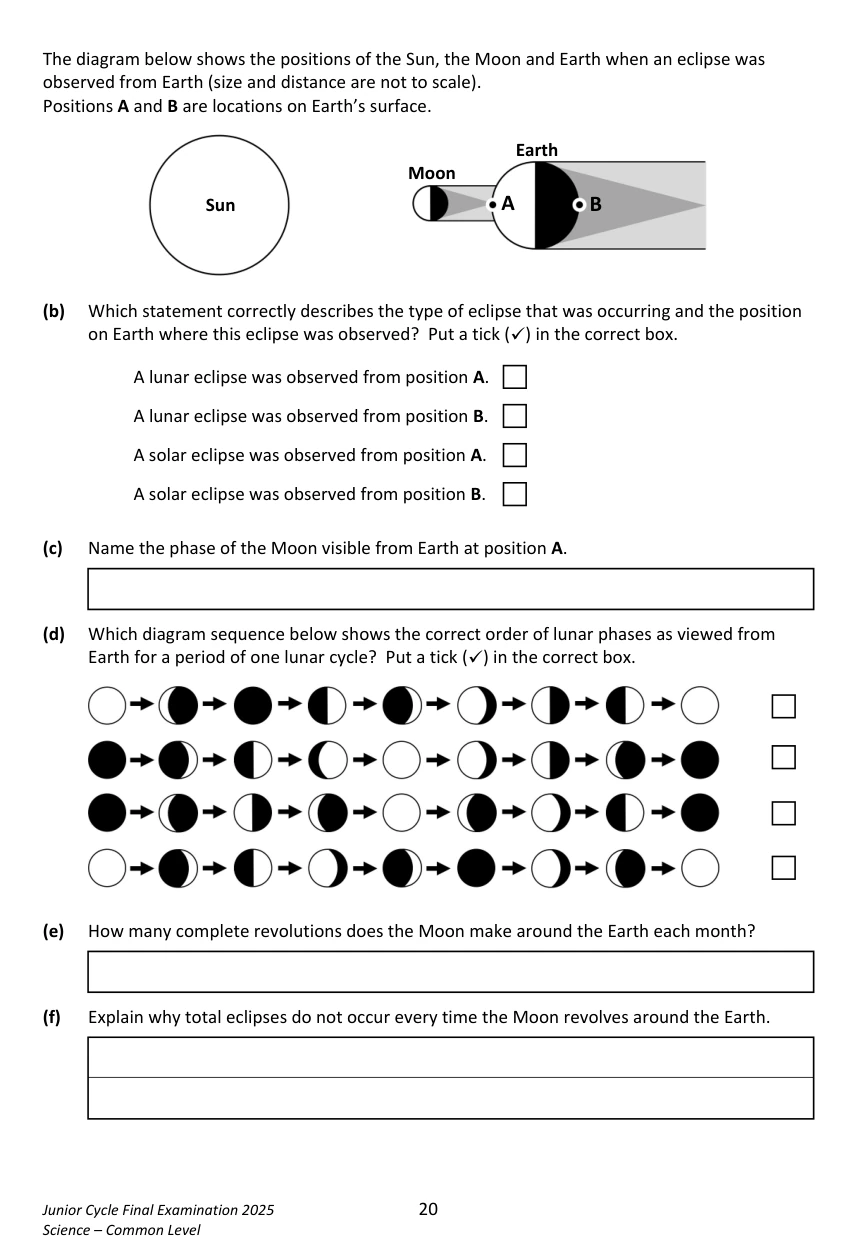
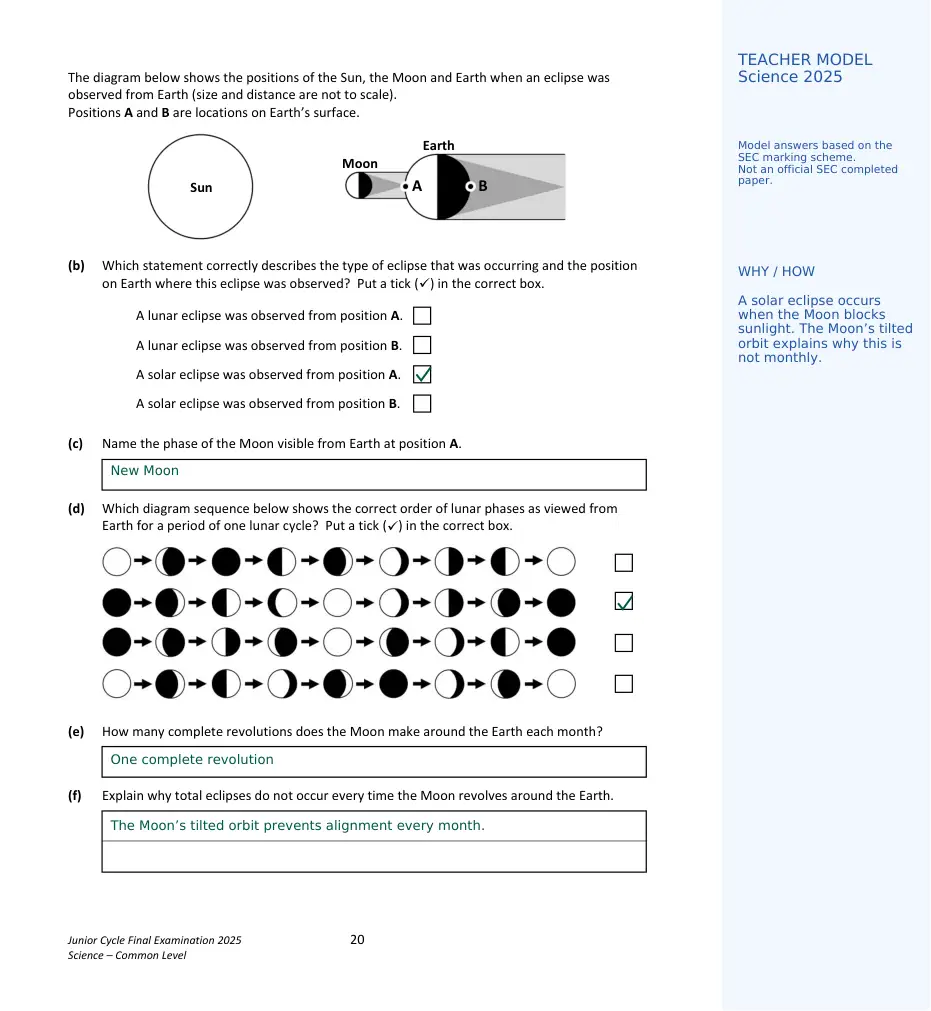
b) Position A.
c) New Moon.
d) New → waxing crescent → first quarter → waxing gibbous → full → waning gibbous → last quarter → waning crescent → new.
e) One rotation in one orbit, so approximately one revolution.
f) The Moon's orbit is tilted relative to Earth's orbit, so Sun, Moon and Earth are not aligned every month.
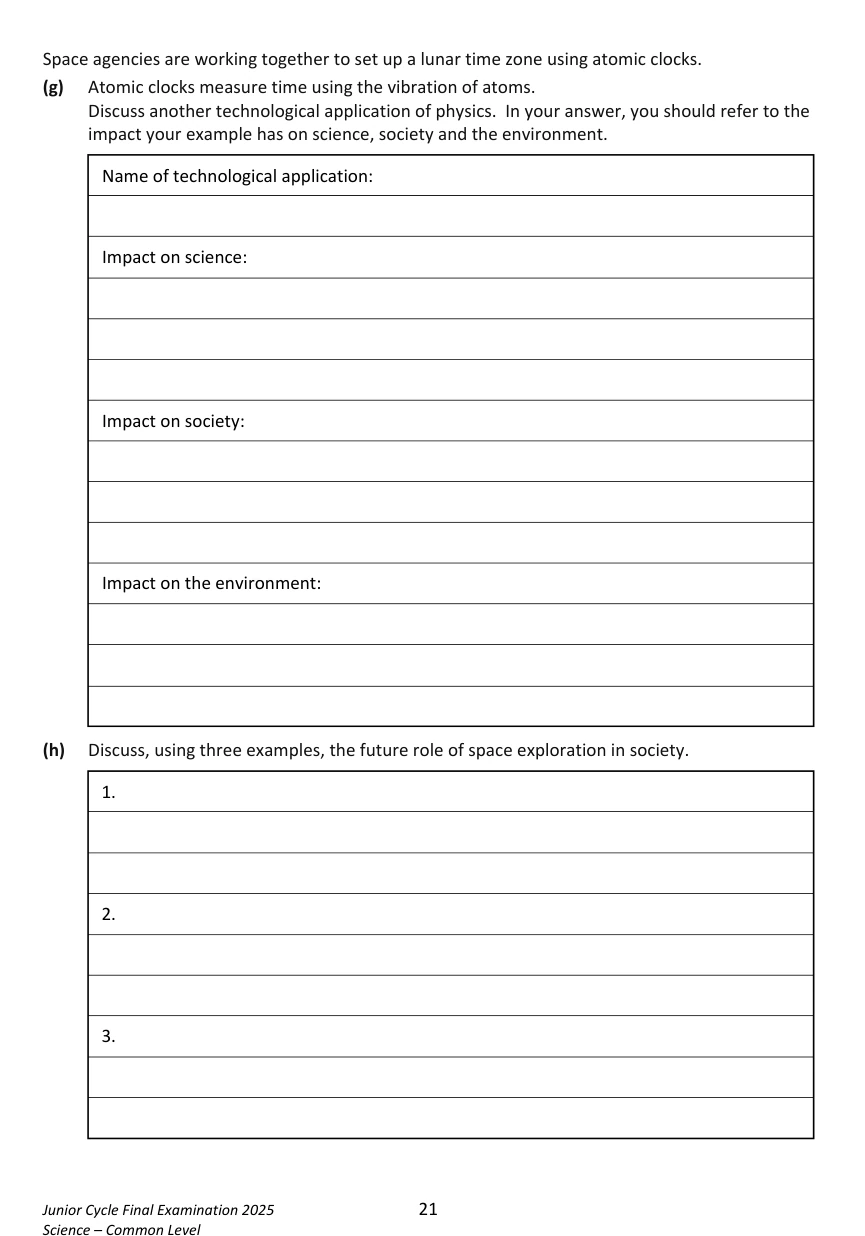
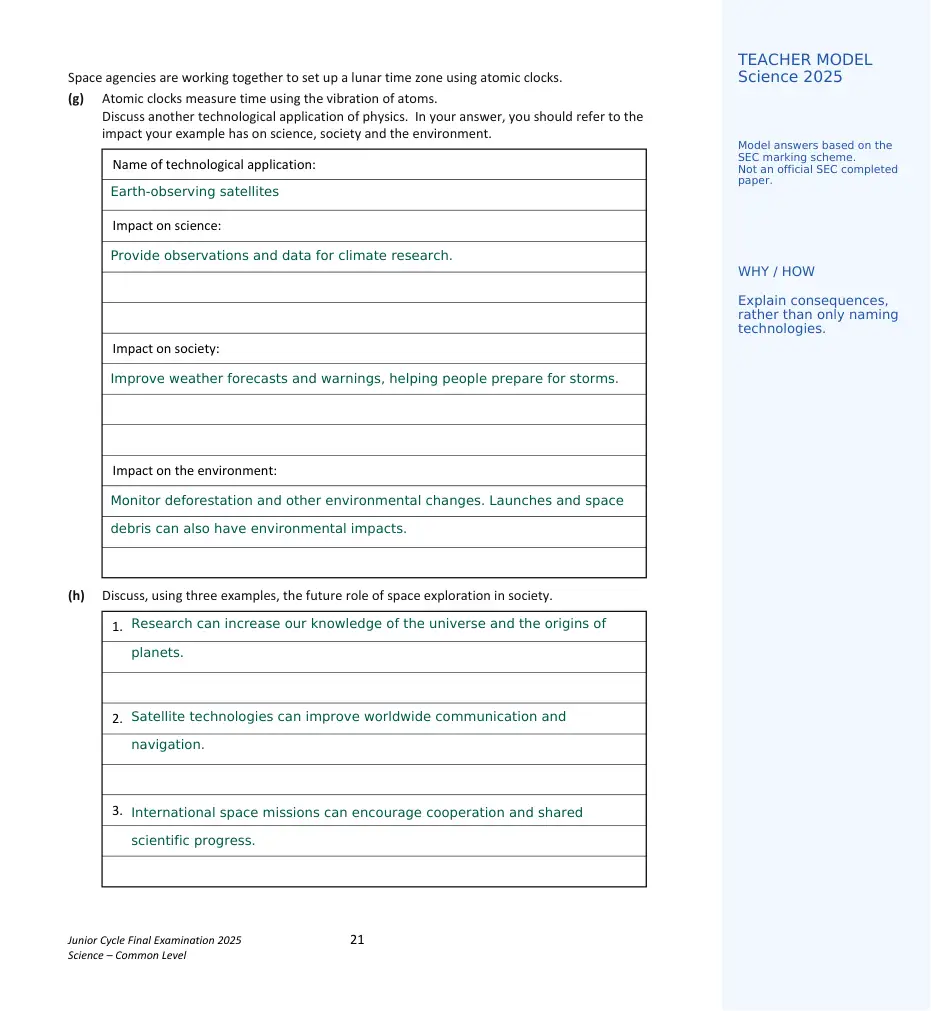
g) Example: Earth-observing satellites. Science: provide climate data. Society: improve weather warnings. Environment: help monitor deforestation, though launches and debris also have impacts.
h) Space research increases knowledge of the universe; satellite technologies improve communication; international missions can encourage cooperation. Explain each benefit rather than listing names only.
Teacher sign-in and homework controls
Questions and worked solutions are open to everyone. Teachers can sign in to assign homework.
Join a class or manage your homework →