2025 · Question 14 · Section B
Photosynthesis and respiration
Photosynthesis · Respiration and breathing · Cells · Earth and Moon · Investigations · Graphs
Mixed topics: some parts assess other topics. The whole question is preserved.
Open in original paper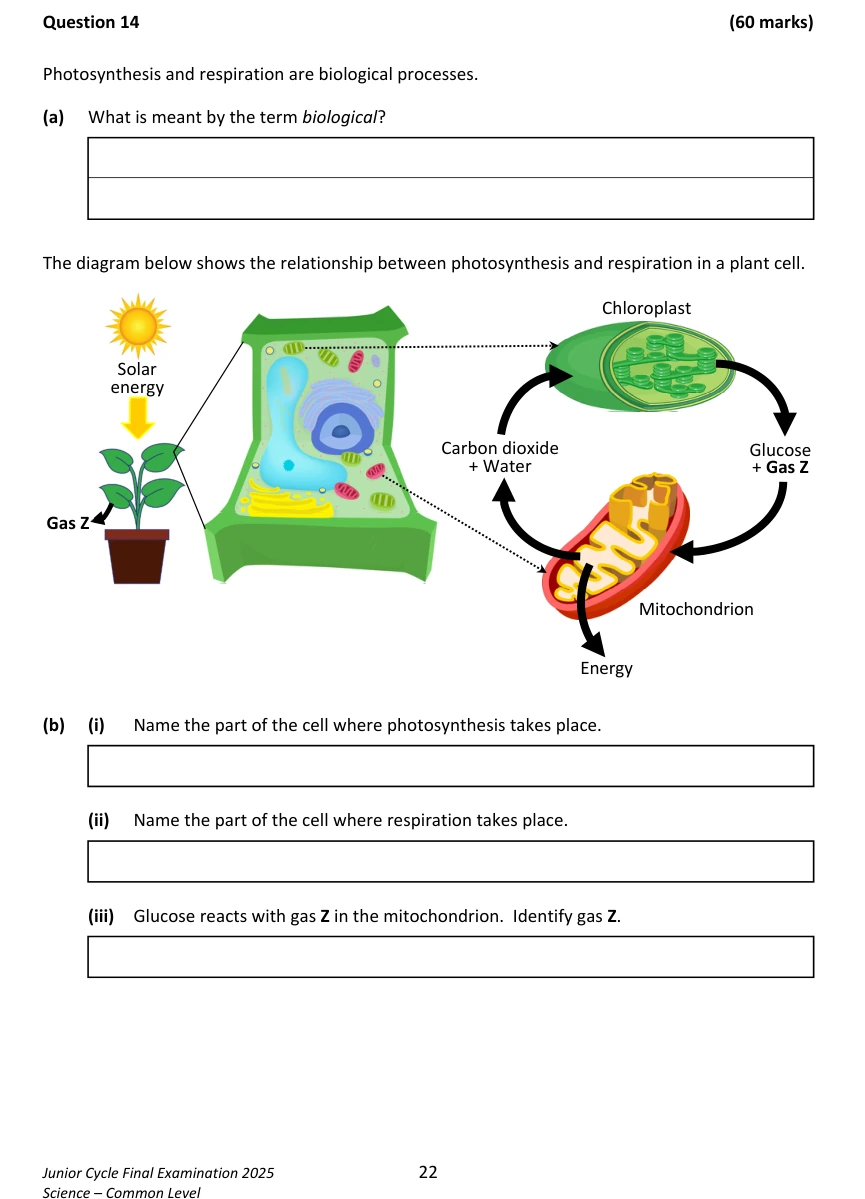
Show solutions
2025 · Question 14 · Worked solution
Answers are placed on the original paper, with diagram labels and blue teaching notes alongside. Teacher-completed model based on the SEC marking scheme. Added explanations are teaching notes; no answer mark allocations have been added.
Text version and further explanations
Study solution adapted from SEC marking scheme with added explanation. Teaching guidance, not an official SEC worked answer.
Working and answers are in dark text. Blue “Why this works” notes explain the key ideas beside the relevant step. On a phone, the note appears directly underneath.
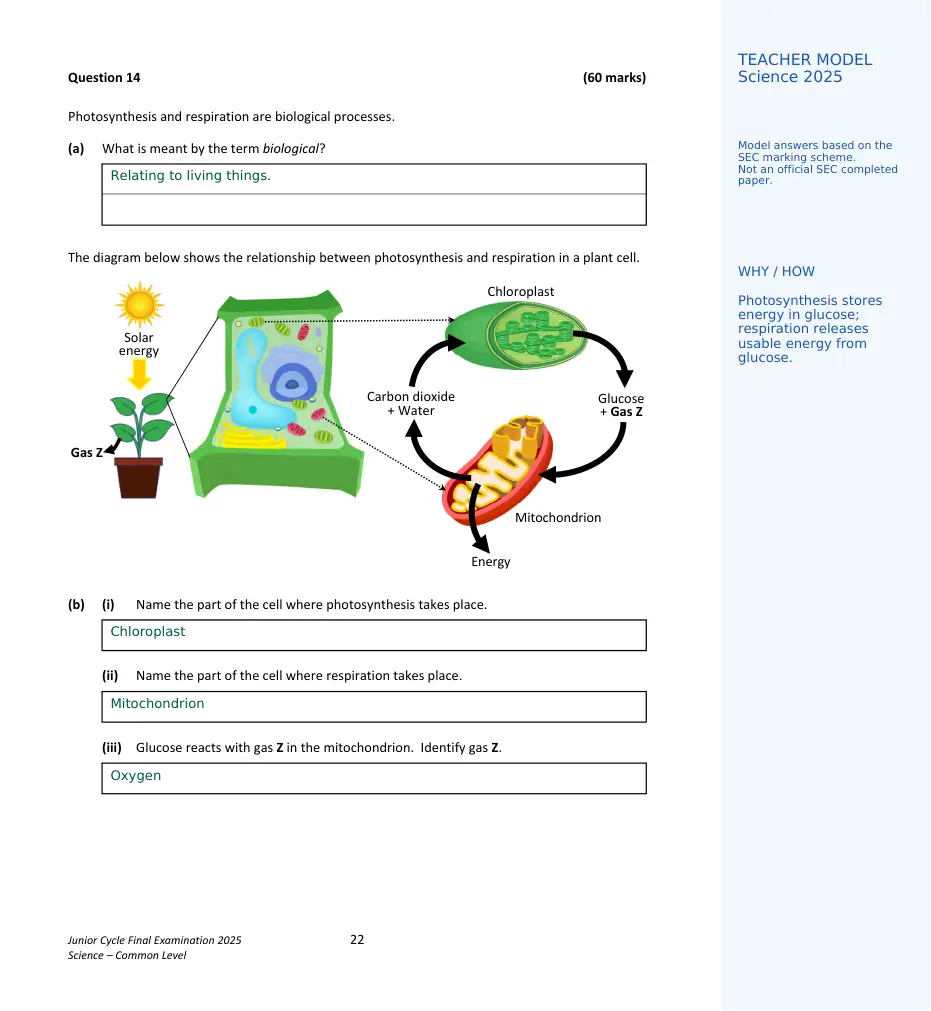
a) Biological means relating to living things.
b) i) Chloroplast. ii) Mitochondrion. iii) Oxygen.
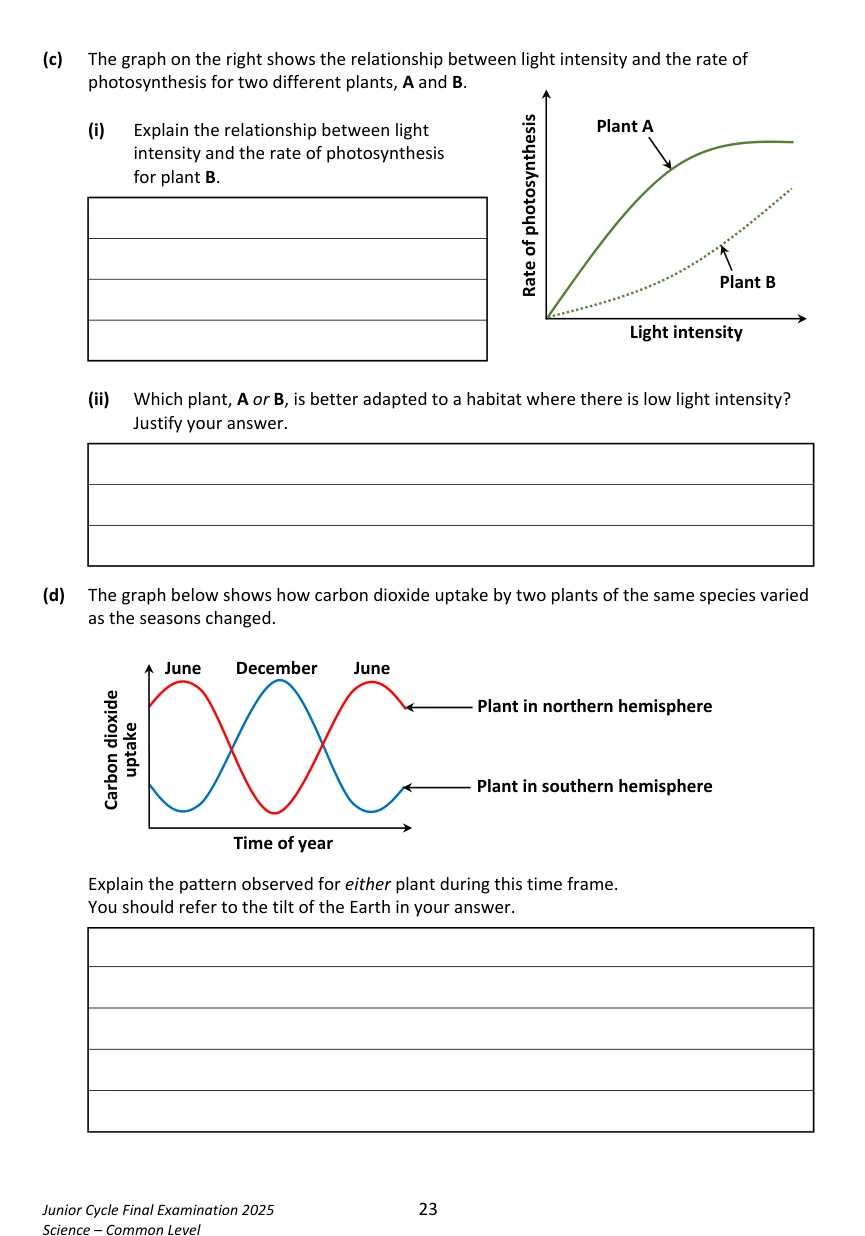
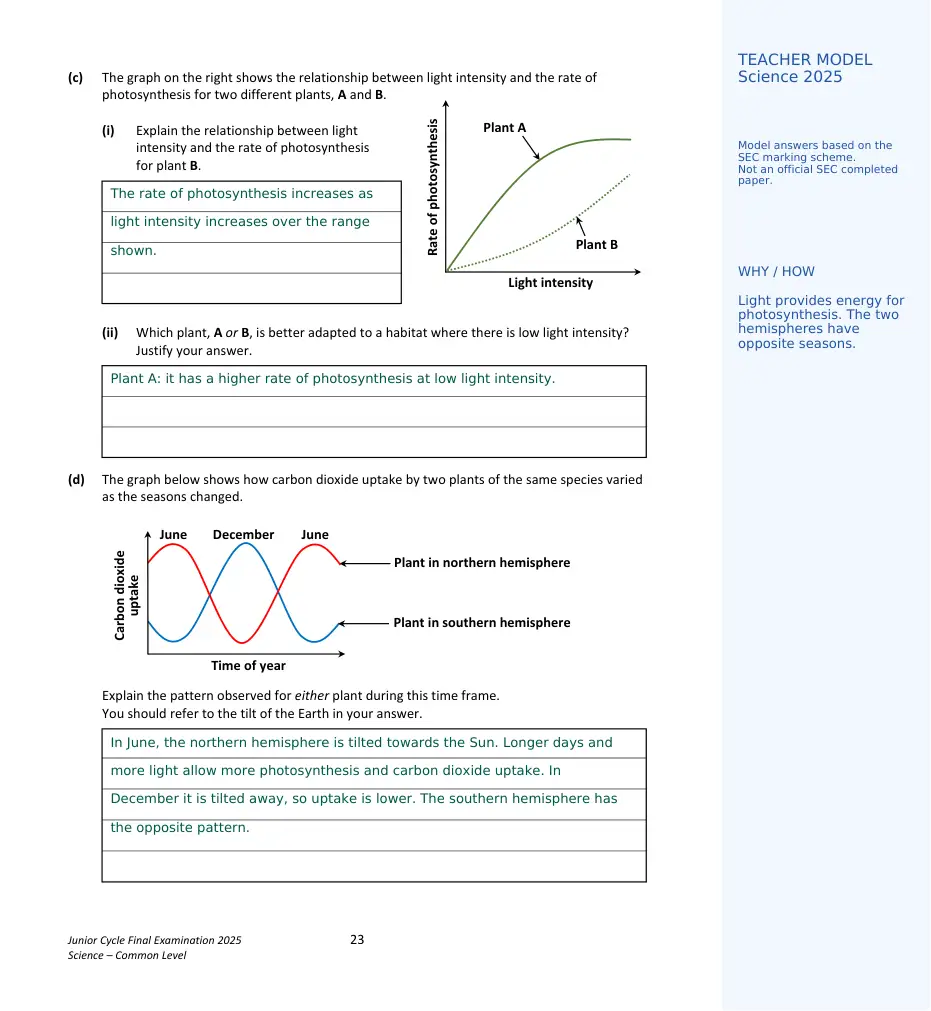
c) i) The rate increases as light intensity increases over the range shown. ii) Plant A: higher rate at low light intensity.
d) When a hemisphere is tilted towards the Sun it receives more light, allowing a higher photosynthesis rate; tilted away, it receives less light.
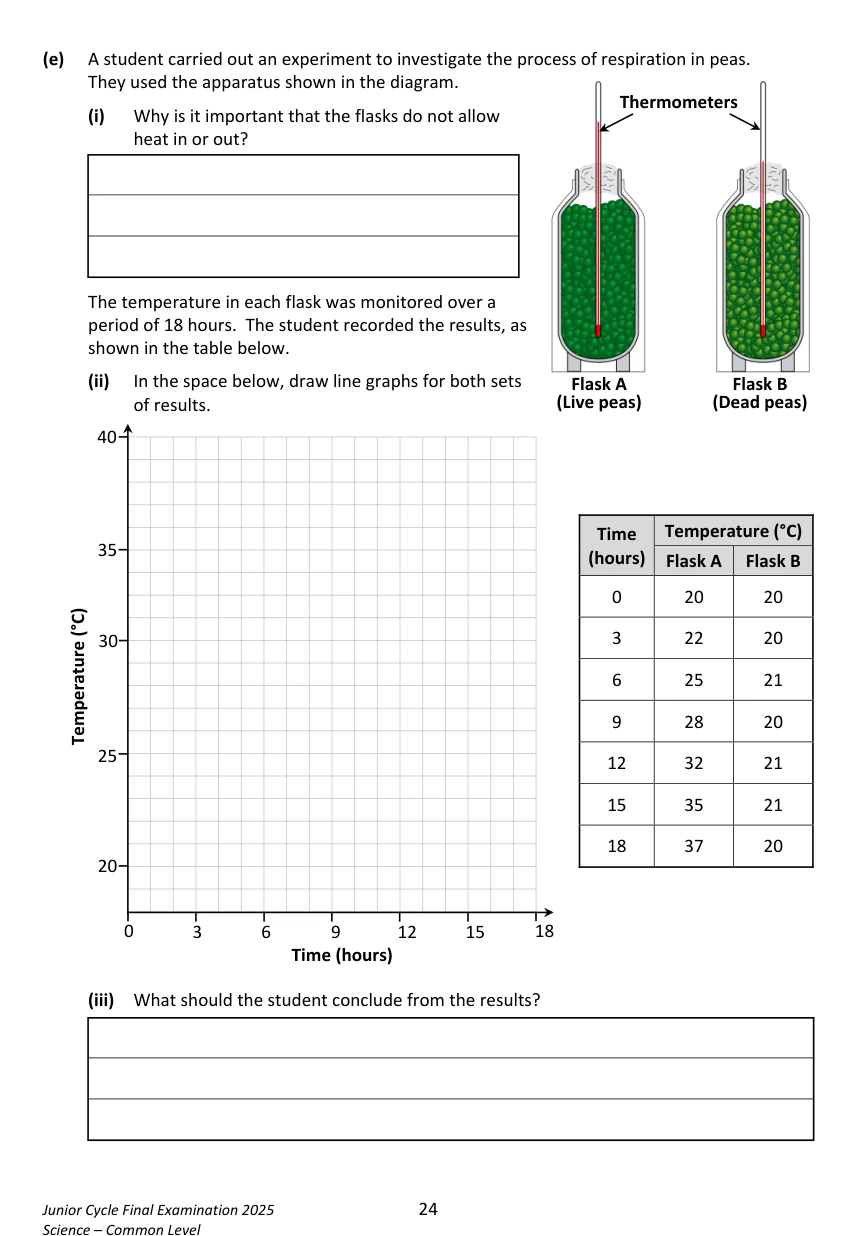
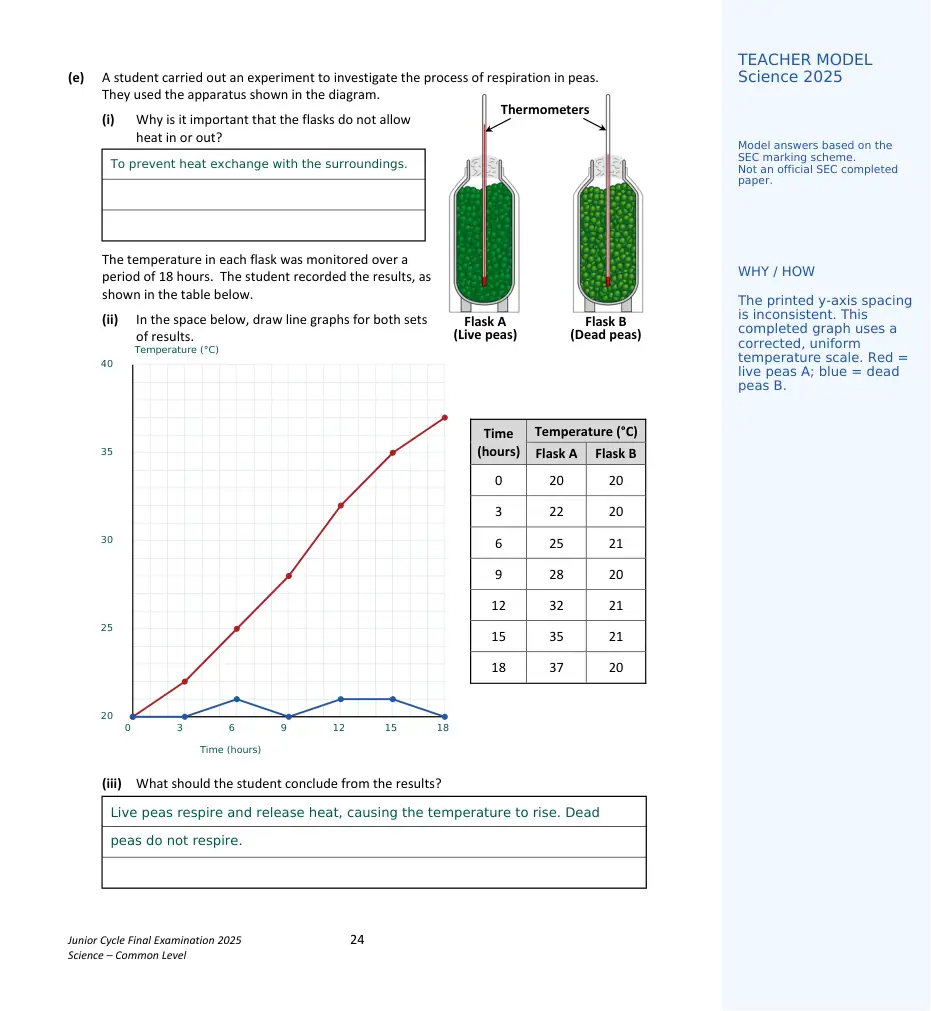
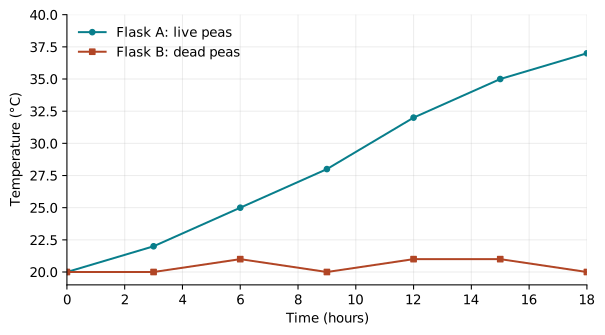
e) i) Insulated flasks prevent external heat transfer, so a temperature rise can be attributed to heat released by the peas rather than the surroundings. The dead peas provide a comparison control. ii) Plot the two data sets as shown in the corrected-scale graph. The printed y-axis has an error between 30 and 35 °C; use a consistent scale. iii) Live peas respire and release heat; dead peas do not.
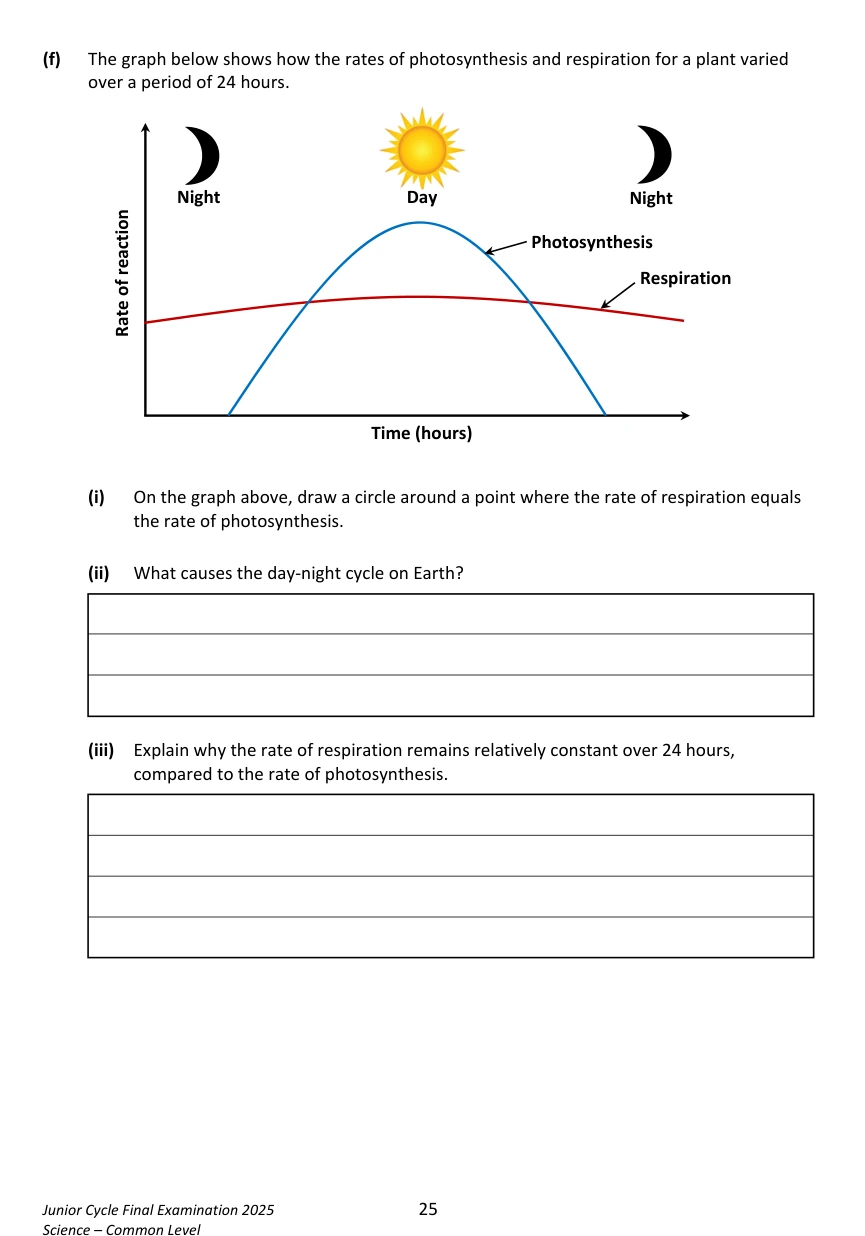
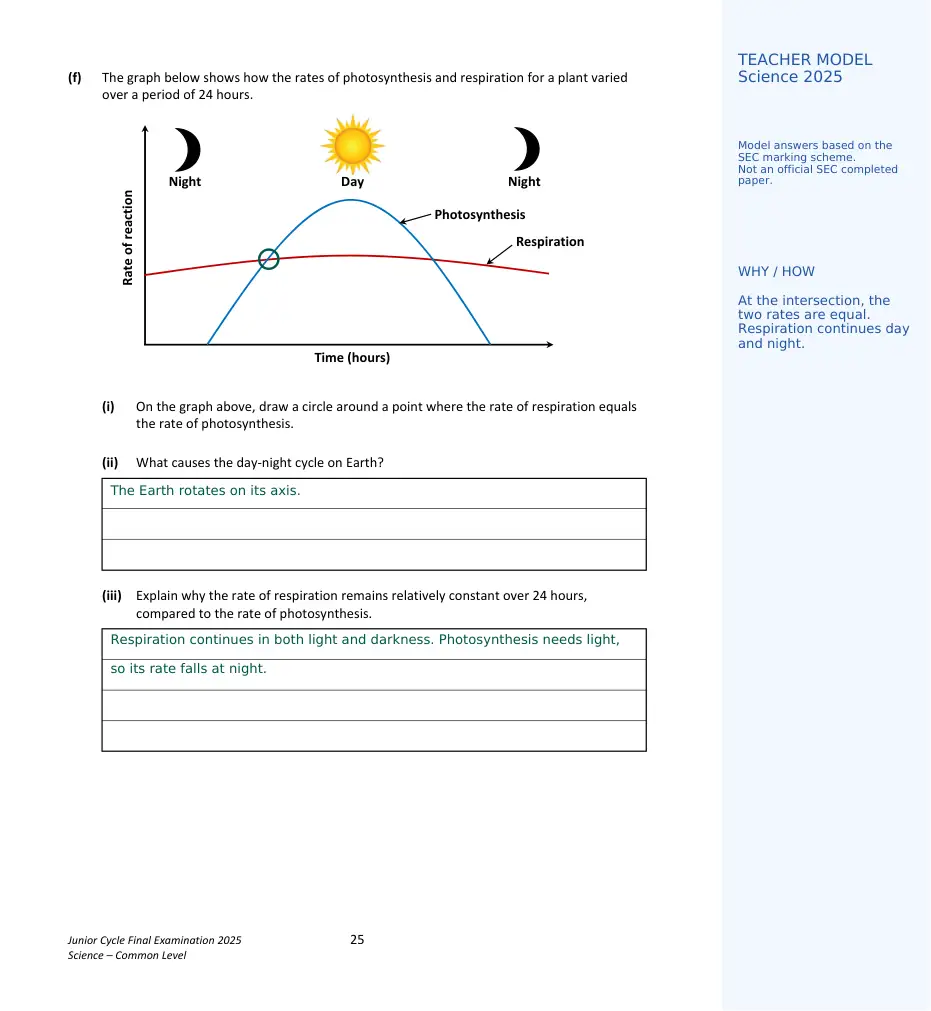
f) i) Circle either point where the photosynthesis curve crosses the respiration line: their rates are equal at those intersections. ii) Earth's rotation. iii) Respiration continues in light and darkness; photosynthesis requires light.
Teacher sign-in and homework controls
Questions and worked solutions are open to everyone. Teachers can sign in to assign homework.
Join a class or manage your homework →