2026 · Question 12 · Section B
Fertilisation and development
Human reproduction · Genetics · Cells · Microscopes · Graphs · Ethics
Mixed topics: some parts assess other topics. The whole question is preserved.
Open in original paper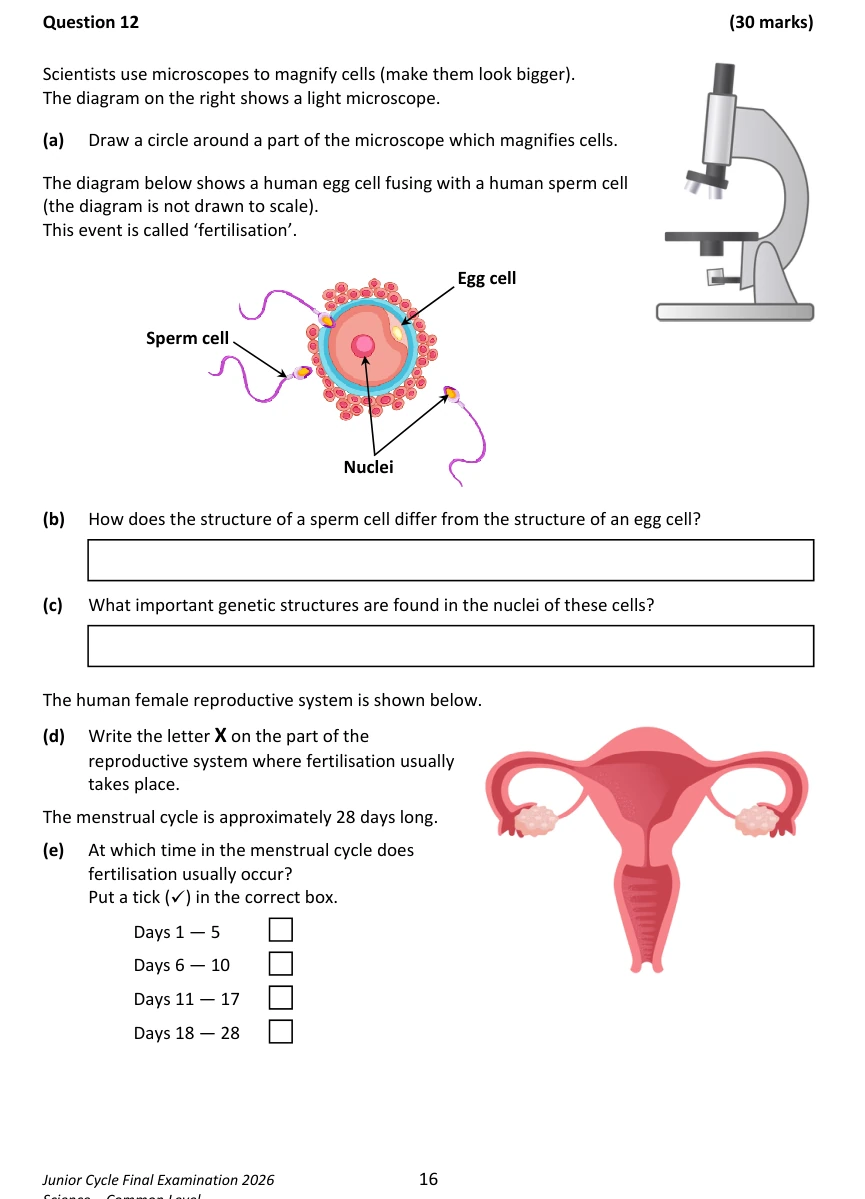
Show solutions
2026 · Question 12 · Worked solution
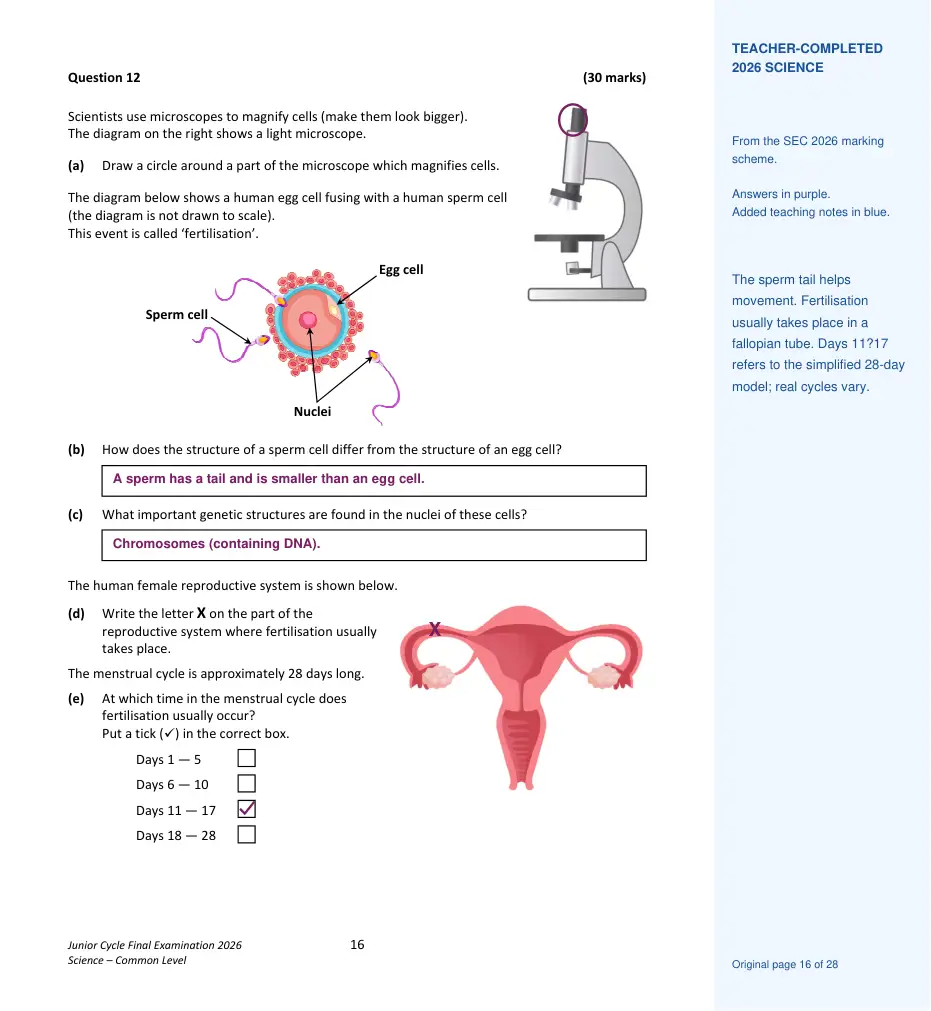
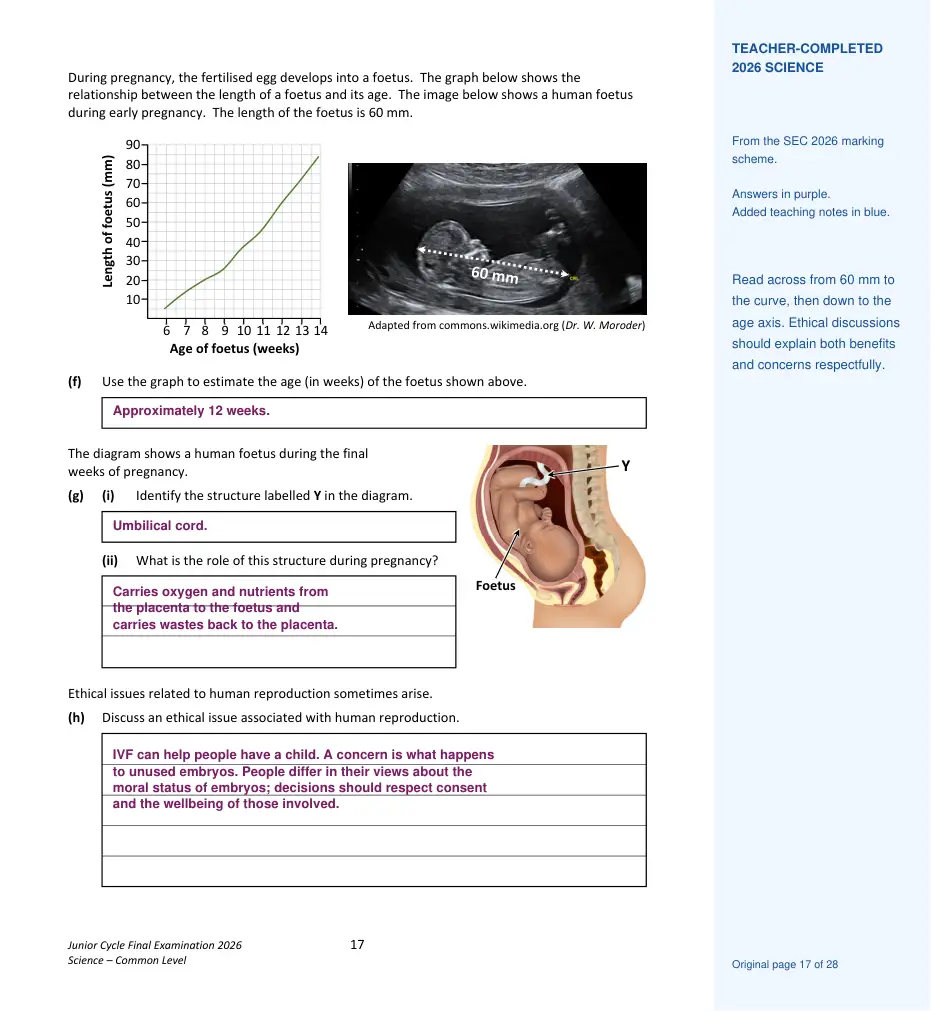
Answers are placed on the original paper, with diagram labels and blue teaching notes alongside. Teacher-completed model based on the SEC marking scheme. Added explanations are teaching notes; no answer mark allocations have been added.
Text version and further explanations
Teacher solution based on the SEC 2026 marking scheme with added explanations. Teaching guidance, not an official SEC worked answer.
Working and answers are in dark text. Blue “Why this works” notes explain the key ideas beside the relevant step. On a phone, the note appears directly underneath.
a) Circle the eyepiece or an objective lens.
b) A sperm cell has a tail and is much smaller than an egg cell.
c) Chromosomes containing DNA.
d) Mark X on a Fallopian tube.
e) Days 11–17, around ovulation in the model 28-day cycle. Real cycles vary.
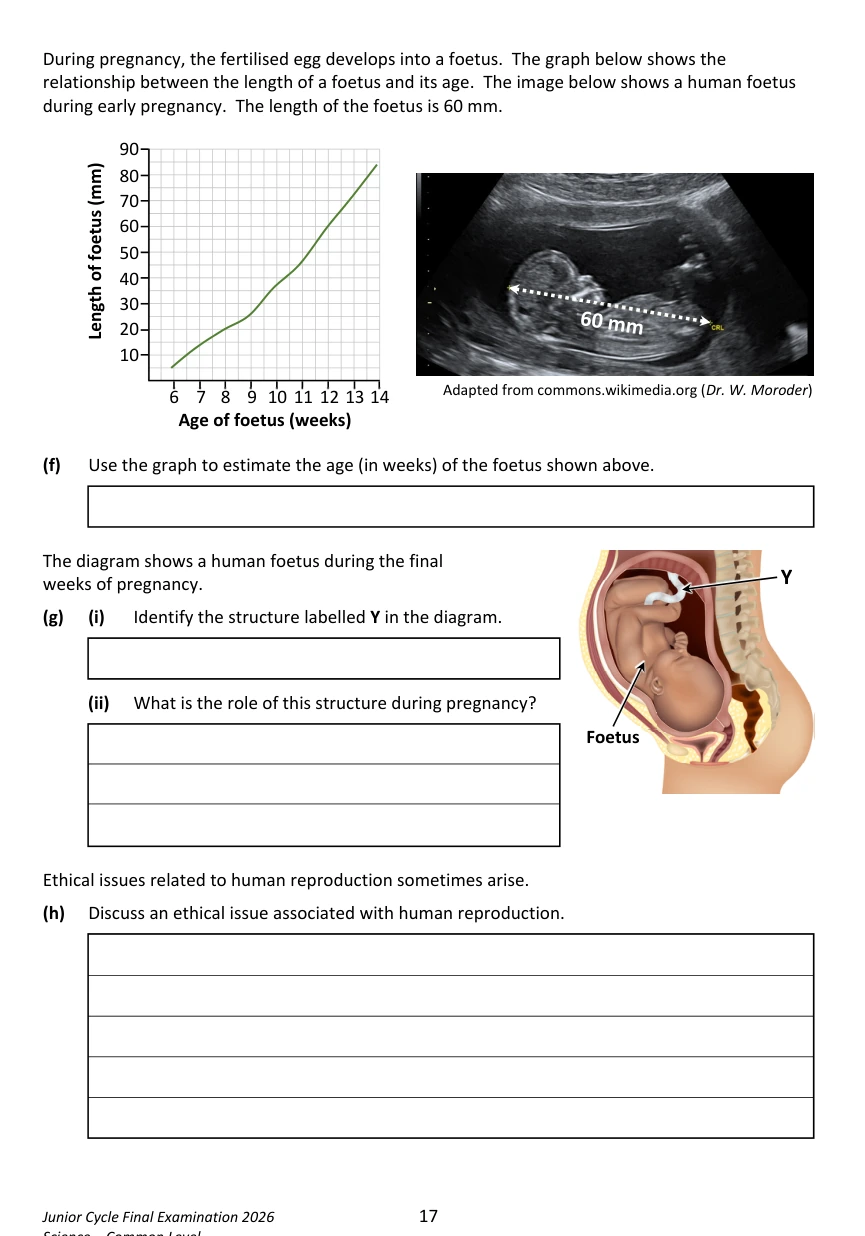
f) Approximately 12 weeks for a 60 mm foetus.
g) i) Umbilical cord. ii) It carries blood between the foetus and placenta, delivering oxygen and nutrients to the foetus and taking waste products towards the placenta. The placenta is the exchange surface; Y points to the cord.
h) Example: IVF can help people have a child, but decisions about unused embryos raise ethical concerns. Explain differing values respectfully; no particular personal belief is required.
Teacher sign-in and homework controls
Questions and worked solutions are open to everyone. Teachers can sign in to assign homework.
Join a class or manage your homework →