2026 · Question 16 · Section B
Magnesium reactions
Periodic table · Materials · Chemical reactions · Conservation of mass · Chemical formulae · Acids and bases
Mixed topics: some parts assess other topics. The whole question is preserved.
Open in original paper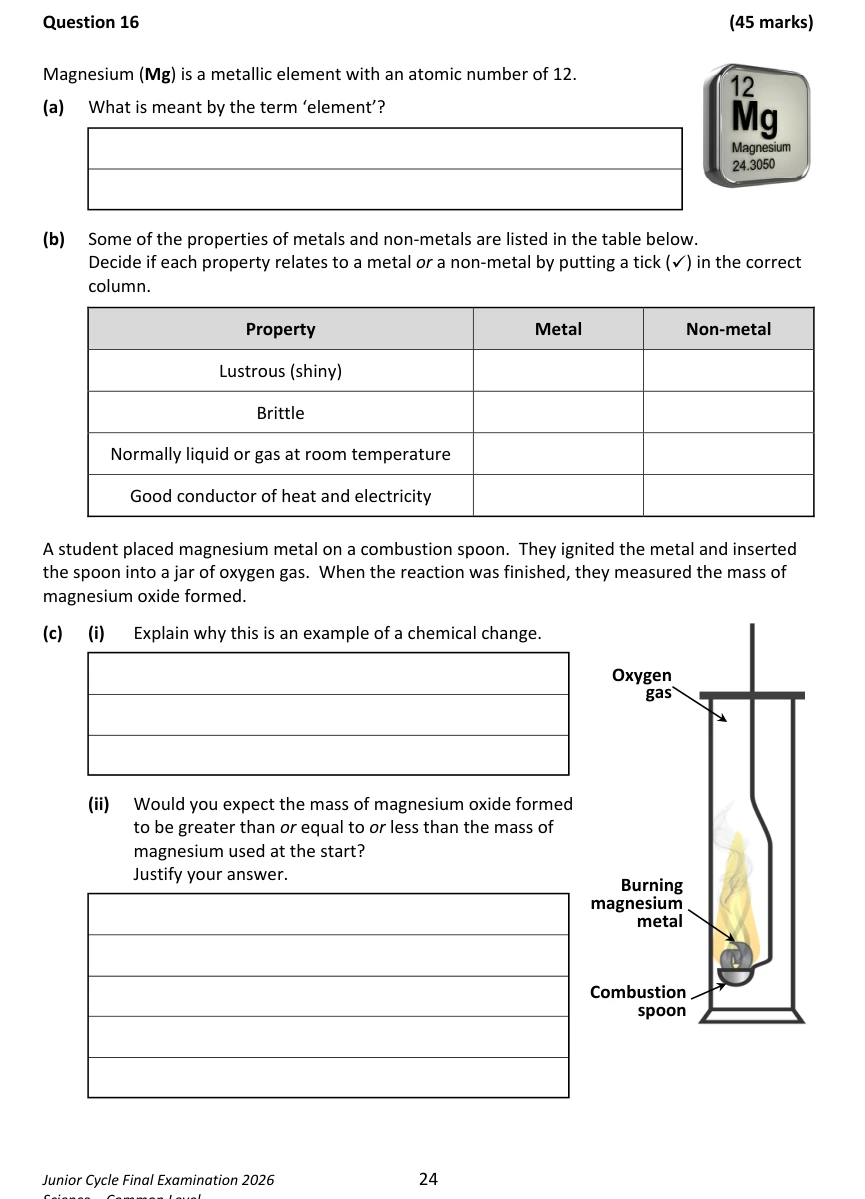
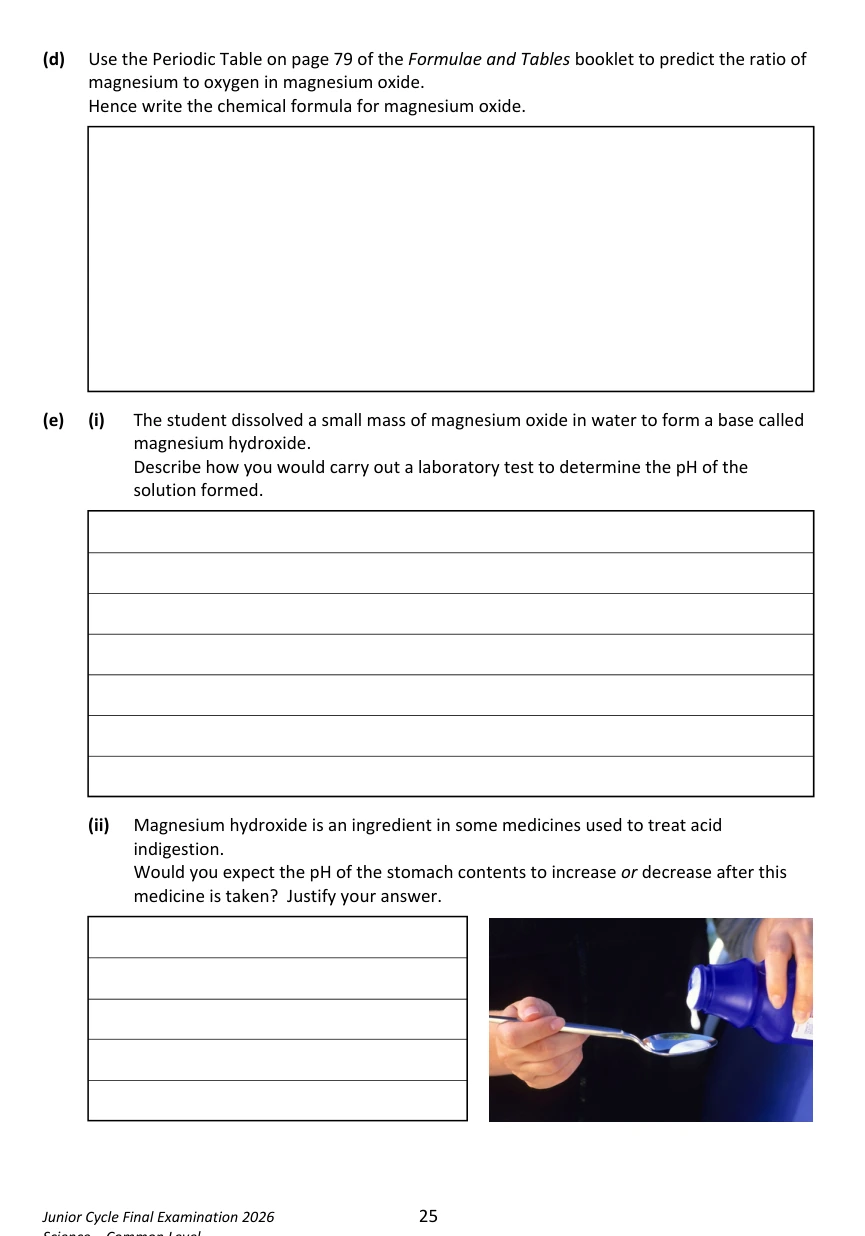
Show solutions
2026 · Question 16 · Worked solution
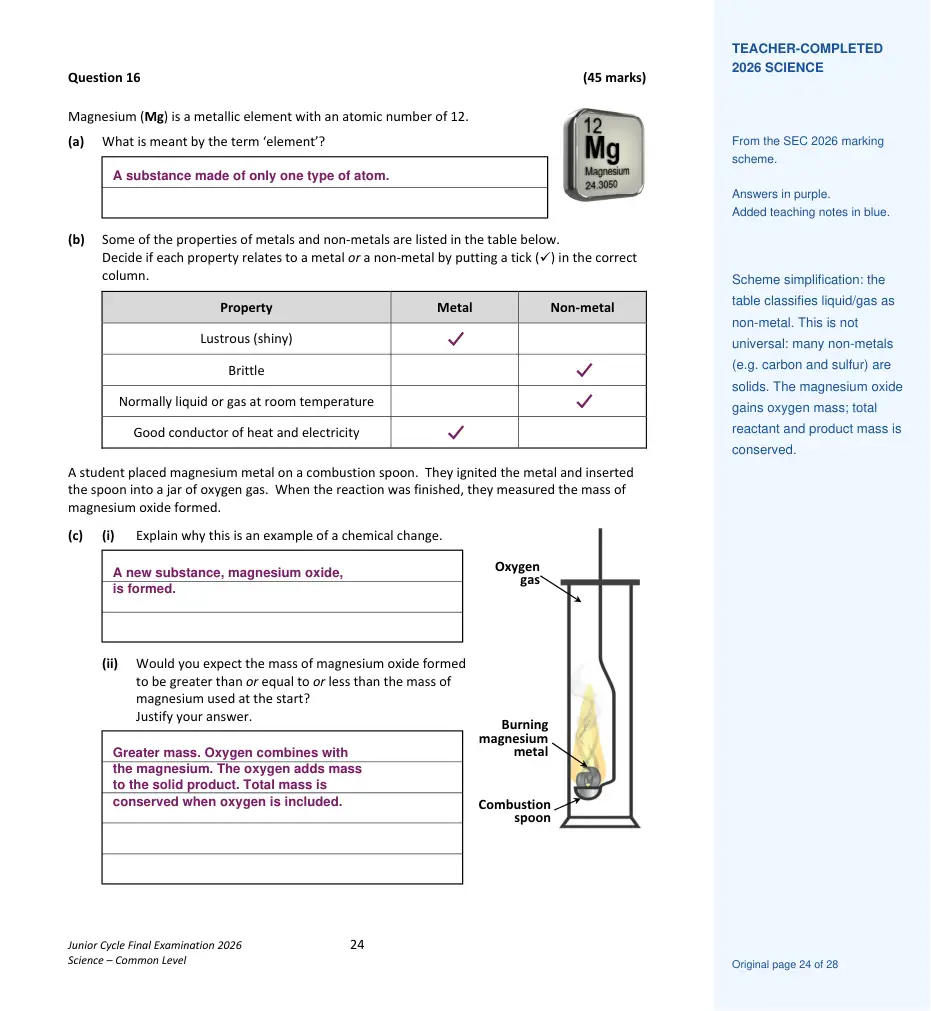
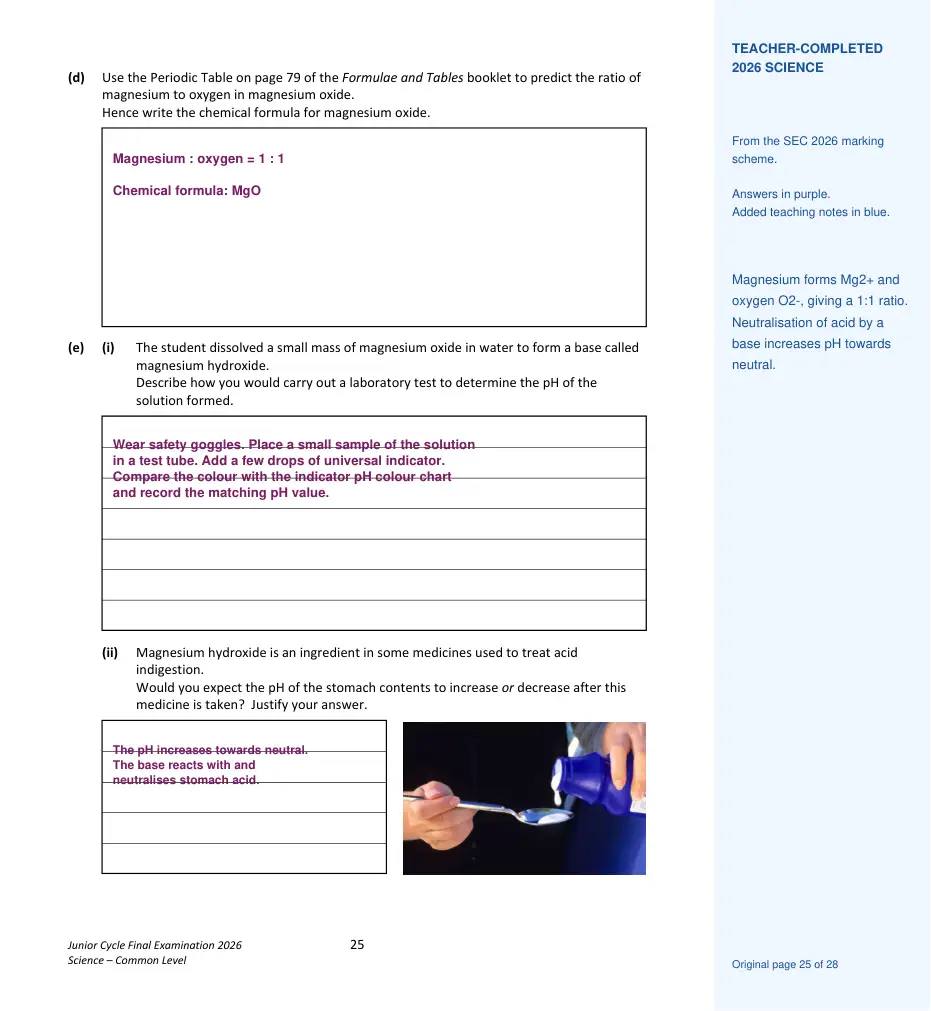
Answers are placed on the original paper, with diagram labels and blue teaching notes alongside. Teacher-completed model based on the SEC marking scheme. Added explanations are teaching notes; no answer mark allocations have been added.
Text version and further explanations
Teacher solution based on the SEC 2026 marking scheme with added explanations. Teaching guidance, not an official SEC worked answer.
Working and answers are in dark text. Blue “Why this works” notes explain the key ideas beside the relevant step. On a phone, the note appears directly underneath.
a) An element is a substance containing only one type of atom.
b) In order: metal; non-metal; non-metal; metal, as given in the SEC scheme. The room-temperature statement is a simplified classification: non-metals can also be solids, such as carbon and sulfur.
c) i) A new substance, magnesium oxide, forms. ii) Its mass is greater than the starting magnesium because oxygen from the gas combines with it. Total mass of all reactants and products is conserved.
d) Mg:O = 1:1, so the formula is MgO.
e) i) Add universal indicator to a small sample; compare its colour with the pH chart. Use clean equipment and goggles. ii) The pH increases towards neutral because the base reacts with stomach acid.
Teacher sign-in and homework controls
Questions and worked solutions are open to everyone. Teachers can sign in to assign homework.
Join a class or manage your homework →